Old Melbourne Gaol: essential checklist before you buy tickets
You can arrive at 377 Russell Street with plenty of time and still have the visit go sideways. The problem is rarely the building.
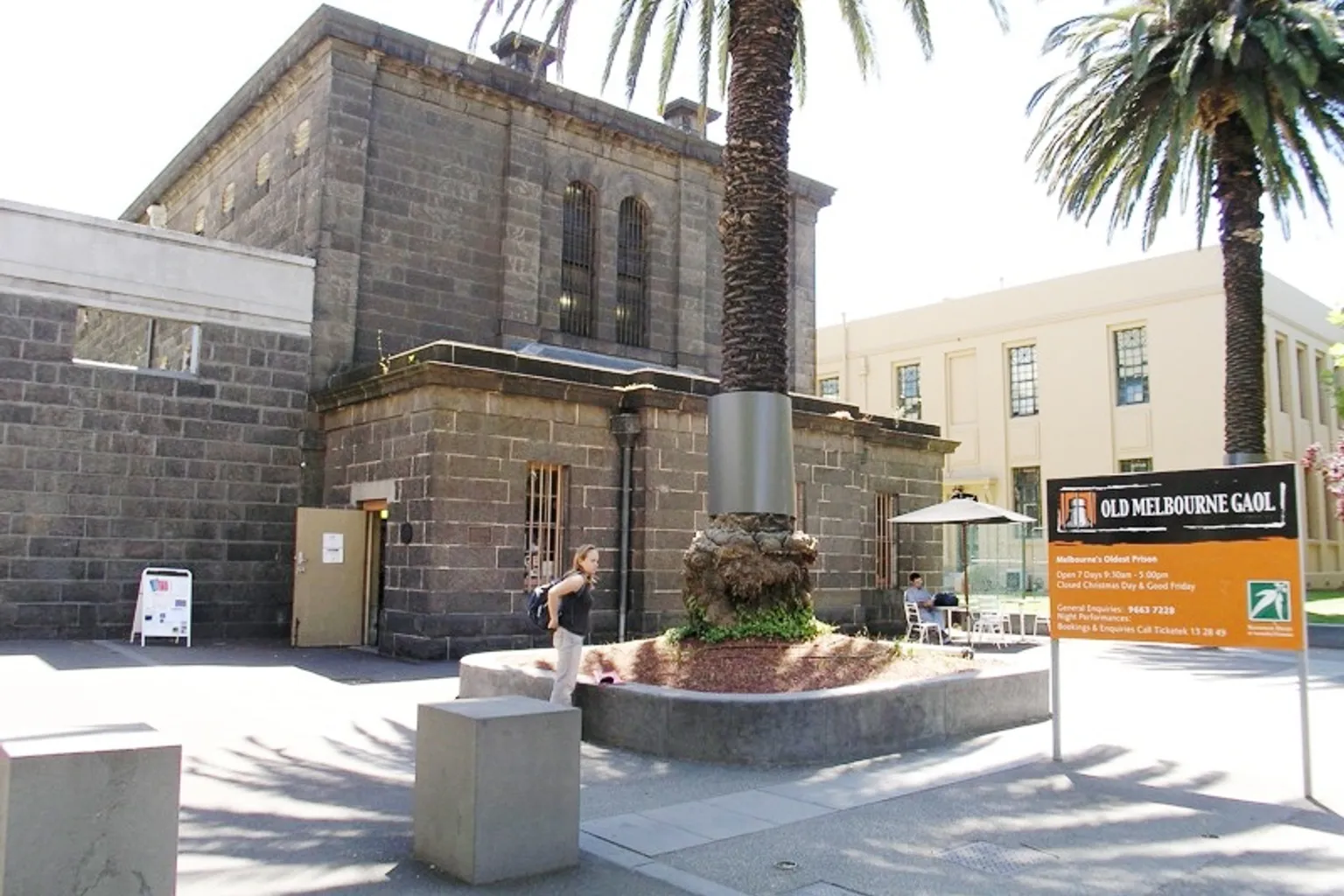
It is the ticket combination, the entry rules, the last admission window, or an optional experience that was treated as if it came with general admission.
Tickets and prices
Old Melbourne Gaol
I
Save
Box office and online booking
- Adult AUD38
- Child AUD22
- Reduced AUD30
AUD38
Official websiteII
entry ticket
Entry ticket · Includes souvenir
Includes an entry ticket, a souvenir, access to see the gallows, and stories about criminals like Ned Kelly, women, and children.
AUD50.23
Book ticketsOld Melbourne Gaol works best when you decide what you are buying before you reach the gate. General admission covers the core site. Guided experiences, the City Watch House and evening programmes may sit outside that base ticket, depending on the product and date. Add the wrong option, arrive too late, or turn up without proof for a concession ticket, and the day becomes a negotiation.
The practical rule is simple: match the ticket to the group, check the current conditions, and leave enough time to see the site without sprinting through it.
Ticket Tiers: What You’re Actually Buying
General admission is the foundation. It gives access to the main gaol experience, including the cell blocks and the associated exhibition areas included in the standard visit. An audio guide may be available in selected languages, but the exact availability and format can change, so check the current ticket description rather than relying on an old screenshot or a reseller summary.
Everything beyond that foundation needs closer reading. A guided tour, an interactive experience or an evening programme may be sold as an upgrade, a bundle or a separate ticket. The wording matters because the products do not all work in the same way.
The usual ticket categories are divided along these lines:
- Adult — the standard full-price admission category.
- Concession, student or under-30 — a reduced category available only to visitors who meet the stated conditions and can show the required proof.
- Child — a reduced rate for the applicable age range.
- Family: two adults and two children — a bundled option for the stated group size.
- Family: one adult and two children — a smaller family bundle for a single adult travelling with children.
Do not treat the family option as automatically cheaper. It may be the sensible choice, but the answer depends on the actual number of adults and children in your group and on the current prices. If your party falls outside the bundle, compare the family ticket plus any additional admission with the equivalent individual tickets before paying.
That calculation is particularly useful when a family has more children than the bundle includes. One family product and an additional child admission may be the correct combination. A group with one adult may need a different family product from a group with two adults. The point is not to memorise a formula; it is to check the ticket conditions against the people actually travelling.
National Trust of Australia (Victoria) members may have access to free or discounted general admission under the current membership arrangements. Bring the membership card and confirm the relevant conditions before you arrive. Membership benefits can apply differently to general admission, tours and special programmes, so do not assume that a free site entry also covers every add-on.
General admission is the base layer. Buy an extra experience because you want it, not because the checkout page makes it look compulsory.
There is another distinction worth keeping clear: the ticket price shown on a listing is not always the complete amount you will pay. The official booking channel and third-party sellers can display products differently, and the final total may depend on booking conditions, taxes, currency conversion or seller-specific charges. Compare the amount at the final payment stage, not just the first number you see.
Essential Entry Requirements and Membership Perks
A ticket category is only useful if you can meet its entry conditions. Concession and student admission generally require current proof. An under-30 product, where available, may require proof of age. If you cannot demonstrate eligibility at the gate, staff may require you to pay the difference to the applicable full-price category.
Carry the document rather than assuming a digital image will always be accepted. A current student card, government concession card or government-issued photo ID is more dependable than an expired card or a message buried in an email account. For children, bring proof of age if the age band is close or likely to be questioned.
A sensible document stack looks like this:
- Adult admission — usually requires the ticket or booking confirmation; photo ID is still useful when a ticket is tied to a name or when several bookings look similar.
- Concession or student admission — bring the current card or document that proves eligibility.
- Under-30 admission — carry government-issued proof of age if that category appears in the current booking system.
- Child admission — have age documentation available when the child is close to the upper or lower boundary of the stated age band.
- Family admission — keep the booking details together and make sure the accompanying adults understand which people are included.
Membership deserves the same level of attention. If you are relying on a National Trust benefit, bring the membership card and read the conditions attached to the specific attraction. Reciprocal arrangements can change, and a benefit that applies to one property or one type of admission may not automatically transfer to a guided tour or a special event.
Save the booking confirmation before leaving for the gaol. A screenshot is useful when mobile reception is slow, but it should not be your only copy if the booking contains a QR code or important terms. Keep the confirmation in your email and on your phone, and make a note of the booking name or reference. This is less about drama than speed: the less time spent searching at the counter, the more time you have inside.
The same caution applies to changes and cancellations. Booking conditions vary by ticket type and sales channel. Some tickets can be moved to another date, some require notice, and some special programmes are less flexible. Read the change policy before paying if your itinerary is still moving.
Optimising Your Visit: Timing and Recommended Arrival
The gaol’s published opening hours and last-entry rules should be checked close to the visit. Opening hours can change for public holidays, private functions, maintenance or special programming. A search result from several months ago is not a reliable timetable.
The key distinction is between opening time and the time at which you can comfortably begin the visit. The site is not a quick doorway attraction. You need time to move through the cell blocks, read the interpretation material, use the audio guide if available and absorb the building rather than simply collect the entrance photograph.
A practical day plan looks like this:
1. Early in the day — useful if you prefer a quieter start, are travelling with children, or have a guided activity later. It also gives you more flexibility if the visit takes longer than expected.
2. Around the middle of the day — often the most complicated period for visitors who have not booked ahead. School groups, tour parties and general visitors may converge, particularly during busy travel periods.
3. Later in the afternoon — can work well if the attraction’s current last-entry time leaves enough room for the full experience. Do not confuse a late arrival with a late closing time; the remaining window may be shorter than it appears.
Aim to arrive before the published last-entry cut-off, with a margin. If the site recommends a final admission time, treat it as the latest practical start rather than an invitation to arrive at the last minute. A visitor entering near closing may technically be admitted but still have to shorten the route.
Weekdays outside school-holiday periods are often easier to manage than the busiest weekend periods, but there is no universal quiet hour. Group bookings, events and seasonal demand can alter the pattern. If the visit is central to your day, use the booking calendar and current operating information rather than building the itinerary around a guess.
The gaol closes on certain public holidays, including Good Friday and Christmas Day. Check the official calendar for the year of your visit because holiday operations and special opening arrangements can change.
Night programmes need a separate decision. Hangman’s Night Tour and themed evening experiences such as Ghosts? What Ghosts? operate on selected dates rather than as a simple extension of the daytime timetable. Confirm the date, meeting instructions and ticket conditions before arranging dinner, transport or another evening activity around them.
The safest arrival time is not the latest time you can technically enter. It is the time that leaves room for the building to set the pace.
Upgrading Your Experience: Tours and Interactive Add-ons
The core gaol visit and the optional experiences answer different questions.
General admission is for seeing the site and following its standard interpretation. A guided tour adds a shaped narrative and a person who can connect the rooms, people and practices of the prison system. The City Watch House shifts attention towards policing, processing and the adjacent institutional setting. Night programmes use the building differently again, with atmosphere and after-hours storytelling doing more of the work.
| Experience | What it adds | Who it suits |
|---|---|---|
| General admission | Self-guided access to the areas included in the standard visit, with interpretation and any stated audio-guide access | First-time visitors who want control over pace and budget |
| Guided gaol experience, such as Ned Kelly’s Last Stand | A hosted route and a more structured account of the gaol’s history | Visitors who prefer context and storytelling to self-navigation |
| City Watch House experience | An interactive visit in the adjacent former watch-house setting, where included | Visitors interested in policing, custody and the wider justice system |
| Evening programmes, including Hangman’s Night Tour or Ghosts? What Ghosts? | A separate themed experience in an evening setting | Repeat visitors or anyone looking for a different atmosphere |
The City Watch House is not the same building as Old Melbourne Gaol proper. That distinction matters when you are reading a ticket description or planning the sequence of a visit. Some products may combine the two; standard admission to the gaol should not be assumed to include the watch house unless the ticket explicitly says so.
Guided experiences can also use different meeting points and start times. Read the confirmation rather than relying on the general entrance address. If the tour begins at a particular time, arrive early enough to find the meeting point and complete any check-in. A standard entry queue is not a substitute for being present when a hosted tour departs.
Night programmes should be treated as their own booking. They may have separate entry instructions, age guidance, access conditions and cancellation terms. A daytime ticket will not necessarily admit you to an evening event, and an evening ticket will not necessarily include daytime admission. The product description should settle that question before payment.
Before buying an add-on, ask what kind of visit you want:
- Choose general admission if you prefer to move independently and spend more time in the rooms that interest you.
- Choose a guided option if you want the history organised into a clear route and explained as you go.
- Choose the City Watch House when the institutional and policing side of the story appeals more than another circuit of the cell blocks.
- Choose a night programme for the atmosphere and format, not because it is a replacement for every part of the daytime visit.
Do not collect every overlay by default. A full day of structured experiences can leave less room for looking closely at the main site. One well-matched addition is usually more useful than a pile of upgrades selected because they appeared beside the base ticket.
Logistics and Getting to 377 Russell Street
Old Melbourne Gaol is at 377 Russell Street in Melbourne’s CBD. Walking, public transport and rideshare are all practical options, but the best choice depends on where you start, how much luggage you have and whether your arrival coincides with a busy city period.
For visitors already staying in the central grid, walking is often the least complicated option. Use a mapping app on the day and allow for crossings, construction, weather and the pace of the slowest person in your group. The most direct route is not always the most comfortable one when you are pushing a pram, carrying bags or travelling with children.
From Southern Cross Station, Melbourne Central, Flinders Street Station, Queen Victoria Market or hotels around Carlton and Fitzroy, check the live walking and tram directions shortly before setting out. Do not rely on a fixed route description copied from an old itinerary. Melbourne streets change around construction works, tram diversions and event closures, and the correct stop can depend on the service running that day.
The tram network can be useful for longer approaches. Check whether the relevant journey falls within the Free Tram Zone and whether your particular service and stop are covered. The zone is a transport rule, not a guarantee that every route from every starting point is free. Live service information is the better guide than a generic claim that no ticket or validation is ever needed.
Driving is usually less straightforward than walking. The gaol does not function as a private car park, and street parking in the CBD may be limited or subject to time restrictions. If you need to drive, identify a commercial car park before leaving and allow time to walk from it. This is especially important for a timed tour: circling the block for a space is a poor way to protect a booking.
Rideshare is convenient when you have luggage or are travelling with someone who cannot manage a longer walk. Set the destination to the attraction and check the final approach with the driver. Temporary road restrictions, loading zones and congestion can affect the exact drop-off point, so the vehicle may stop a short distance from the entrance.
Cycling is possible, but plan the final lock-up rather than assuming the heritage site will provide storage. Use a legal public rack or another approved location. Do not attach a bike to railings, gates or heritage elements simply because they are close to the entrance.
Groups need more planning than individuals. School parties, coach groups and corporate visits may use separate booking procedures or arrival arrangements. If you are responsible for a large party, confirm the group channel, payment process, accessibility needs and meeting point before the day. A public booking made in several small batches can create avoidable delays at entry.
Before You Pay: The Few Checks That Matter
The useful preparation is not complicated. It is just easier to do at home than at the counter.
1. Count the group as it will actually arrive. Match each person to the correct adult, concession, student, under-30, child or family category.
2. Put the required proof beside the booking confirmation. If someone is using a discounted ticket, make sure the document is current.
3. Check the official opening hours, last-entry information and holiday closures for your date.
4. Decide whether you want only general admission or one specific add-on. Read the inclusions instead of assuming that a bundle covers every building and programme.
5. Compare the final purchase total, not only the headline price. If you use a third-party seller, inspect the checkout summary for any additional booking, service or currency-related amount before confirming.
6. Save the confirmation in a form you can access without searching through multiple accounts.
7. Check the route on the day, particularly if you are taking a tram or walking through an area affected by construction or events.
8. Leave a margin before any timed tour. The entrance is only one part of the journey.
The purchase decision is where most avoidable confusion begins. Official booking is generally the clearest route for current availability, inclusions and entry conditions. Third-party listings may show different inventory or package names, and the price displayed at the start may not be the amount presented at the final checkout. That does not make every reseller unsuitable; it means the total and the terms deserve a deliberate look.
Families should run the ticket comparison twice: once using the family bundle and once using the relevant individual categories. The cheaper combination depends on the current prices and the group’s exact age mix. Membership holders should perform the same check with the member conditions included.
The route deserves equal restraint. There is no need to memorise a fixed walk from every nearby station or attraction. Use a current map, confirm the entrance address and allow time for the final approach. A neutral, up-to-date route is more useful than a confident set of directions that no longer reflects tram works or street access.
Match the ticket, prove the discount, verify the hours, read the inclusions and check the final total. The route comes last because it is the easiest part to update.
Old Melbourne Gaol rewards visitors who arrive with the practical details settled. Know which admission category applies, carry the document that supports it, understand whether the City Watch House or a night tour is included, and arrive early enough for the site to be more than a hurried sequence of rooms.
Once that work is done, the visit can become what it should be: time with the cell blocks, the gallows, the death mask, the surviving architecture and the stories attached to the place. The building supplies the atmosphere. Your ticket and timing decide how much of it you actually get to experience.
Practical info
Currency: AUD
Driving: on the left
Emergency number: 000
Key facts
Built: 1839
Heritage status: listed on the Victorian Heritage Register
Official website: oldmelbournegaol.com.au
FAQ
Does general admission include the City Watch House?
What documents do I need to bring for concession or student tickets?
Are there family tickets available for Old Melbourne Gaol?
Can I use my National Trust of Australia (Victoria) membership for free entry?
What should I do if I am running late for a timed tour?
Is there parking available at Old Melbourne Gaol?
Photo: Charlie Brewer from Sydney, Australia / CC BY-SA 2.0 — Wikimedia Commons