Aromatherapy bath rituals: three paths to evening relaxation
An effective aromatherapy bath ritual setup for stress relief depends on three controllable variables: water temperature, essential oil dispersion, and sensory load.
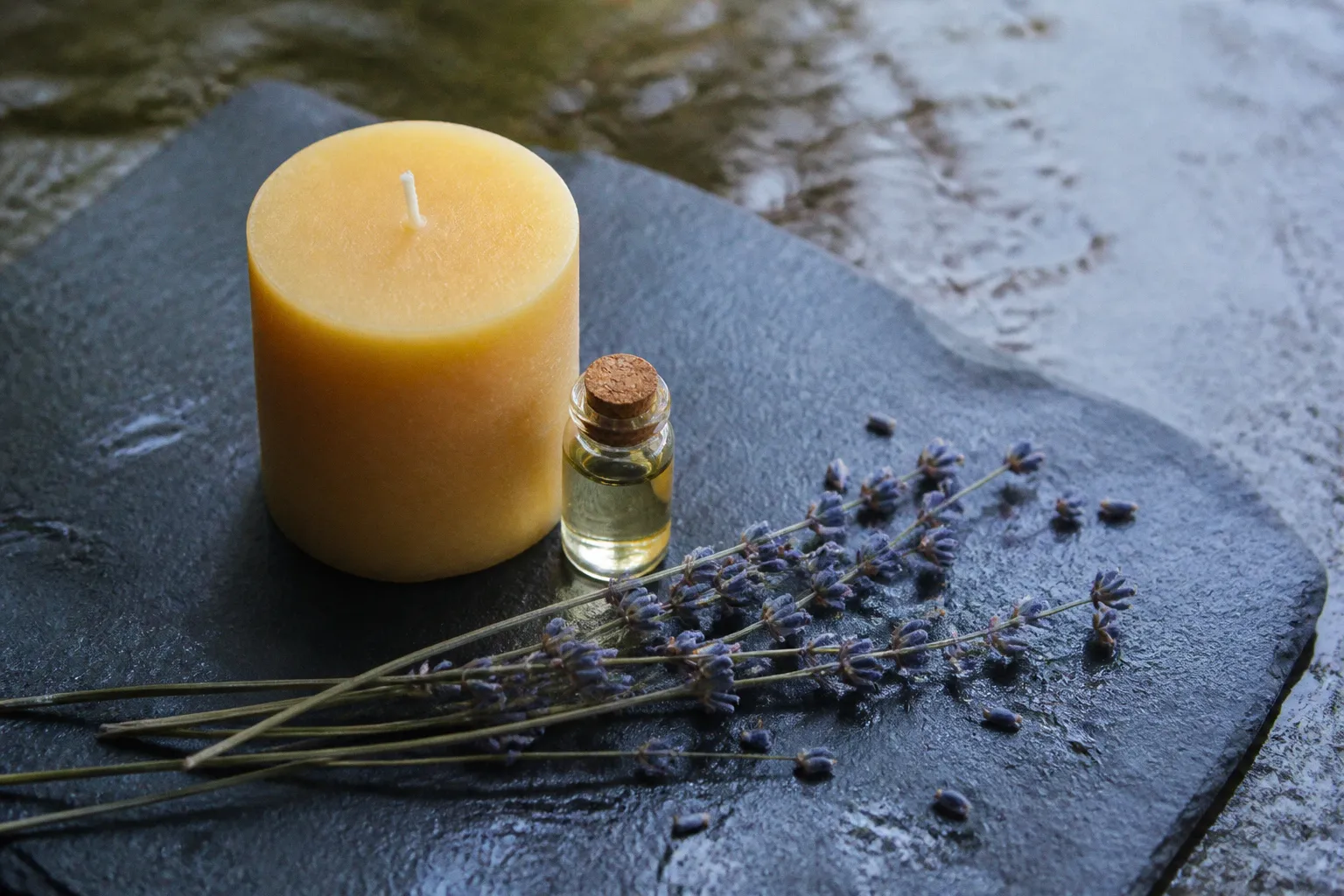
If one fails, the ritual becomes either chemically unsafe or physiologically counterproductive.
The baseline is specific. Keep bathwater between 36°C and 40°C. Use essential oils only after dilution in a carrier oil or a suitable solubilizer. Limit the soak to 15–20 minutes. These parameters control skin exposure, evaporation, and the risk of dehydration, irritation, fatigue, or dizziness.
The three paths below serve different purposes. A botanical salt soak is suited to muscle tension. An emulsified oil bath supports reduced water loss from the skin surface. A sensory ambiance ritual uses fragrance outside the water and is the lowest-contact option for sensitive skin.
The science of temperature: why 36°C to 40°C is the working range
Water temperature changes the physical response to bathing. It also changes how the skin barrier behaves during exposure.
At 36°C to 40°C, bathwater is warm enough to support muscle relaxation without creating the thermal stress associated with hotter water. Water above this range can increase skin dehydration and may contribute to fatigue, dizziness, or elevated blood pressure. The upper limit is not a target. It is a boundary.
Cold water has the opposite problem. It can produce alerting sensory input and muscle contraction rather than the gradual downshift required for an evening ritual. That does not make cold bathing inherently harmful. It makes it unsuitable for the specific objective of reducing evening arousal.
A bath is not a more effective relaxation tool because it is hotter. The relevant variables are exposure time, temperature, and the condition of the person entering the bath.
Practical temperature control
A reliable setup requires more than a subjective estimate based on hand comfort. Hands tolerate temperature differently from the trunk and legs. A bath thermometer gives a more consistent result.
Use this sequence:
1. Fill the bath and measure the water before adding oils, salts, or other ingredients.
2. Adjust toward 36°C to 40°C. For an evening bath, the middle of the range is a reasonable starting point.
3. Enter slowly. Sudden heat exposure can produce light-headedness, particularly after exercise, alcohol consumption, or a long period without food.
4. Keep the soak to 15–20 minutes. Longer exposure increases contact time with warm water and can aggravate dryness.
5. Leave the bath if dizziness, nausea, palpitations, or unusual fatigue develops.
The 15–20 minute duration is long enough to allow sustained warmth and a reduction in muscular tension. Extending the bath indefinitely does not create a proportional increase in benefit. It increases the opportunity for water loss from the stratum corneum and for irritation from any added ingredients.
A relaxing bath is a controlled exposure, not a heat challenge. Keep the water within 36°C to 40°C and the soak within 15–20 minutes.
The dilution rule: why carrier oils are non-negotiable
Essential oils are hydrophobic. They do not dissolve in water. When undiluted drops are added directly to a bath, they remain as concentrated droplets on the surface rather than dispersing through the water column.
That creates a local exposure problem. The bather may encounter an undiluted droplet on the skin, particularly when entering the water or moving through it. The result can be itching, irritation, or a burning sensation. The same principle applies to sensitive areas and broken skin, where barrier function is already reduced.
Plain bath salts, Epsom salts, and baking soda do not solve this problem. They can change the feel of the water, but they do not function as reliable essential-oil dispersants. Adding essential oil to salt and then tipping the mixture into the bath does not convert the oil into a water-soluble material.
A practical adult dilution range
For a standard adult bath, general safety guidance uses a diluted preparation rather than direct addition:
- 5–10 drops of essential oil in 1 tablespoon, or approximately 15 ml, of carrier oil is a conservative working range.
- A broader 1% to 4% dilution may correspond to approximately 5–20 drops per 15 ml, depending on the dropper, the oil, and the calculation method.
- For sensitive skin or elderly bathers, reduce the amount to 2–3 drops in the carrier medium.
- Do not interpret a larger amount as a stronger or more effective ritual. It is simply a higher exposure.
Drop size is not standardized across every bottle. Viscosity, orifice design, and temperature affect the volume delivered per drop. For routine home use, a lower number of drops is easier to control than a high-concentration mixture.
The carrier oil also changes the bathing experience from a safety perspective. A tablespoon of oil can make the tub and the skin slippery. This is a physical hazard, not a minor inconvenience. The bath should be entered and exited with stable support, and the tub should be cleaned after use.
Carrier oil versus solubilizer
A carrier oil dilutes the essential oil but does not make it water-soluble. It disperses in the bath only imperfectly. Some of the mixture may remain at the surface or deposit on the tub.
A bath-specific solubilizer or emulsifier is a different material. Its function is to help distribute oil through water. The exact usage rate depends on the product and formulation, so the manufacturer’s instructions control the ratio. A solubilizer is generally the more technically controlled option when the goal is even distribution and reduced surface pooling.
This distinction matters for both pure essential oils and finished bath oils. A product labeled as a bath oil may contain an emulsifier, surfactant system, or other dispersing agent. A plain body oil usually does not. A body butter is even less suitable for direct bath use because its waxes and fats are designed to remain on the skin rather than disperse through warm water.
Three paths for an evening bath ritual
The three setups below separate the function of each component. They should not be treated as a formula in which every possible product is added at once.
| Ritual path | Primary purpose | Fragrance delivery | Main technical concern |
|---|---|---|---|
| Botanical salt soak | Support for muscular relaxation and a simple bath structure | Diluted essential oil, if used | Salt does not dilute essential oil |
| Emulsified oil bath | Reduced post-bath tightness and lower surface water loss | Oil dispersed through water | Slippery tub and residue |
| Sensory ambiance ritual | Mental decompression with minimal skin exposure | Diffuser, candle, or external scent source | Avoid excessive fragrance and unsafe placement |
Path One: the botanical salt soak for muscle tension
A salt soak is the most direct setup. It uses the bath itself as the primary medium and keeps the product architecture simple.
The salt can be added according to the product label. Its role is to alter the water experience and provide a structured soaking ritual. It should not be presented as an essential-oil dispersant. If fragrance is included, it requires a separate dilution step.
A workable arrangement is:
- Bathwater at 36°C to 40°C.
- A measured amount of plain bath salt or Epsom salt.
- 5–10 drops of essential oil mixed into approximately 15 ml of carrier oil, or a bath-safe pre-dispersed product.
- A total soak of 15–20 minutes.
- A post-bath rinse if the skin feels coated or irritated.
The essential oil and carrier oil should be blended before they are introduced to the water. Pouring the essential oil onto dry salt and assuming the crystals will disperse it is not equivalent to dilution in water.
For sensitive skin, use 2–3 drops in the carrier medium or omit essential oil entirely. A salt soak without fragrance remains a valid ritual. It also reduces the number of variables if the bather is trying to identify the source of irritation.
When this path is the better choice
Use the salt setup when the desired result is a short, structured soak after physical activity or prolonged muscle tension. The format also works when the bather does not want a pronounced oil film on the skin.
The formulation remains incomplete if the skin is already dry and reactive. Salt can feel uncomfortable on compromised skin, especially after shaving or exfoliation. In that case, warm water alone or a properly emulsified bath product is more conservative.
Path Two: the emulsified oil bath for reduced post-bath tightness
Warm water can leave the skin feeling tight because prolonged water exposure disrupts the surface lipid balance and increases the opportunity for transepidermal water loss, or TEWL, after bathing. An oil-based bath product can reduce that sensation when it is formulated to distribute through water and leave a controlled film on the skin.
The key word is emulsified.
A finished bath oil should contain a dispersing system appropriate for water. A homemade mixture of essential oil and carrier oil does not automatically behave in the same way. It may float, collect in patches, or adhere to the tub.
For a home setup:
1. Select a bath oil labeled for use in water, or use a formulation that contains a suitable solubilizer.
2. Follow the product’s stated amount. Do not add extra essential oil to intensify the aroma.
3. Add the product after the bath has reached the target temperature.
4. Agitate the water gently to distribute the mixture.
5. Soak for 15–20 minutes.
6. Exit with support. Oil on the tub changes traction.
7. Pat the skin dry rather than rubbing aggressively.
A properly dispersed bath oil is not the same as applying a body oil after bathing. Post-bath application is easier to dose and place precisely. It also avoids introducing oil into the tub. For people with dry skin, a fragrance-free body oil or body butter applied to damp skin may provide a more controllable barrier-support step than an oil bath.
Oil selection and the comedogenic scale
The comedogenic scale is often presented as a universal ranking. It is not. Results vary with concentration, formulation, cleansing habits, individual skin response, and the area of application.
Fatty-acid composition still provides useful formulation information. Oils with a higher proportion of oleic acid generally feel different from oils with more linoleic acid. Oleic acid is associated with a richer, more spreading film and may be preferred for body products designed for dry skin. That does not establish a universal acne risk for every user or every body area.
For a bath, the more immediate questions are practical:
- Does the oil disperse through water?
- Does it leave an excessive film on the tub?
- Does the fragrance system irritate the user?
- Is the product intended for rinse-off use?
- Can the amount be controlled?
A heavy oil without an emulsifier is not improved by adding more salt. A shea butter base is not converted into a bath emulsion by adding water. Once water enters a product without an appropriate preservative system, microbial risk changes. That is why a pure body butter should remain a leave-on product unless it has been specifically formulated for rinse-off use.
Dilution reduces concentration. It does not make a non-water-soluble material water-soluble. Dispersion requires an emulsifier or solubilizer.
Path Three: the sensory ambiance ritual for mental decompression
The third path keeps essential oils out of the bathwater. Fragrance is delivered through the room instead of direct skin contact.
This setup is useful for people with reactive skin, those who dislike an oily tub, or anyone who wants to control the aroma separately from the bath product. It also makes it easier to stop the fragrance exposure without draining the bath.
The basic arrangement may include:
- Warm water at 36°C to 40°C.
- A soy wax candle placed on a stable, heat-resistant surface away from the bath edge, towels, curtains, and direct water contact.
- An essential oil diffuser used according to its instructions, with conservative fragrance intensity and adequate ventilation.
- Unscented bath salts or no added bath product.
- A soak of 15–20 minutes.
This is not a reason to fill the bathroom with multiple fragrances. Layering scents in the bathroom should mean controlling compatible sources, not accumulating them. A diffuser, scented candle, body wash, bath oil, and hair product can create an unpredictable mixture. The nose may register the total volatile load as harsh even if each individual product is acceptable.
How to layer scents without creating overload
Use one dominant source and one supporting source at most.
A controlled sequence looks like this:
1. Choose the dominant note. It may come from a candle, diffuser, or bath product.
2. Keep the bath product neutral if the room already contains fragrance.
3. Avoid competing scent families. Two strong products with unrelated profiles create noise rather than a coherent atmosphere.
4. Start with the lowest practical intensity. Increase only if the aroma is not detectable.
5. Ventilate the room after the ritual. Fragrance should not remain trapped at high concentration.
6. Stop immediately if headache, coughing, nausea, or skin discomfort develops.
The goal is not maximum aroma. It is a predictable environment with a manageable exposure level.
Candles add an additional physical risk. A lit soy wax candle must remain attended and placed away from flammable materials. It should never sit on the bath rim where water, steam, or an unstable surface can compromise the flame. A flameless light can provide visual ambience without combustion.
Matching the ritual to the actual problem
The correct path depends on whether the primary issue is muscular tension, dry-feeling skin, or cognitive overstimulation.
| If the main need is… | Use this setup | Keep out of the formula |
|---|---|---|
| Muscle tension after activity | Salt soak with optional diluted fragrance | Undiluted essential oil and excessive heat |
| Dry-feeling skin after bathing | Emulsified bath oil or leave-on body oil after the bath | Plain oil poured into water without a dispersant |
| Fragrance sensitivity | Neutral bath with external ambiance or no scent | Multiple scented products at once |
| A structured evening transition | Ambient candle or diffuser with warm water | High fragrance intensity and long exposure |
| Simplest risk profile | Warm water, short soak, fragrance-free products | Homemade mixtures containing water without preservation |
This separation prevents a common formulation error: treating every bath ingredient as interchangeable. Salt, carrier oil, essential oil, emulsifier, body butter, and fragrance each have different physical functions.
A bath bomb illustrates the same principle. A correctly formulated bath bomb may contain a dispersing system, but the presence of sodium bicarbonate and citric acid does not prove that its essential oils will be evenly distributed. The finished product must be evaluated as a formulation, not by its ingredient list alone.
Common errors in an aromatherapy bath ritual setup
The most frequent failures are procedural rather than exotic.
1. Adding essential oil directly to the water.
This leaves concentrated hydrophobic droplets on the surface. It is the highest-priority error to remove.
2. Using Epsom salt as the dispersing agent.
Salt does not perform the same function as a solubilizer. It cannot reliably dilute essential oil in bathwater.
3. Increasing temperature to compensate for a short bath.
Water above 40°C raises the risk of dryness, dizziness, and fatigue. It does not correct poor preparation.
4. Combining several scented products.
A scented bath oil, candle, diffuser, shower gel, and body butter can create excessive volatile exposure. One primary scent source is easier to control.
5. Using leave-on body products in the tub.
Body butters and many body oils are designed to remain on skin. They may create a slippery film and may not disperse.
6. Adding water to a pure oil or butter base.
Water changes preservation requirements. Without an appropriate preservative system and validated formulation, the product is not stable.
7. Skipping the tub rinse.
Residual oil can affect the next user and increase slip risk. Cleaning is part of the ritual setup, not an optional finishing step.
8. Ignoring the post-bath step.
Patting the skin dry and applying a suitable leave-on moisturizer can be more useful for barrier comfort than adding more ingredients to the bath.
A controlled evening sequence
A repeatable sequence reduces both sensory and formulation errors.
Before filling the bath
Remove unnecessary products from the plan. Decide whether the ritual is salt-based, oil-based, or ambiance-based. Do not combine all three by default.
Prepare:
- A thermometer if available.
- A towel and stable bath mat.
- The measured bath product.
- A diluted essential-oil preparation or a finished bath product, if used.
- A safe candle or diffuser location.
- A fragrance-free moisturizer for afterward.
If a new product is being used, test it on a small area of skin before committing to full-body exposure. A bath is not an efficient setting for identifying a reaction because warm water can increase discomfort and spread the product over a large surface.
During the bath
Keep the water within the target range. Maintain a 15–20 minute limit. The aroma should remain detectable but not dominant. The bather should not need to tolerate eye watering, throat irritation, headache, or skin tingling as evidence that the ritual is working.
If essential oil has been diluted in carrier oil but the skin still feels irritated, leave the bath and rinse. Do not attempt to correct the reaction by adding salts, milk, baking soda, or another oil.
After the bath
Rinse if residue remains. Pat dry. Apply body oil or body butter to slightly damp skin if additional occlusion is needed. This application is easier to control than putting a large amount of leave-on product into the water.
Clean the tub, especially after an oil-containing bath. Extinguish the candle before leaving the room. Ventilate the bathroom if the air feels heavily scented.
Strict do-and-don’t check
Do
- Do keep bathwater between 36°C and 40°C.
- Do limit the soak to 15–20 minutes.
- Do dilute essential oil before it enters the bath.
- Do use approximately 5–10 drops per 15 ml of carrier oil for a general adult setup, with 2–3 drops for sensitive skin or elderly bathers.
- Do use a bath product with a verified emulsifying or solubilizing system when even oil dispersion is required.
- Do treat soy wax candles and diffusers as separate fragrance tools, not as ingredients in the bath.
- Do clean the tub after using oil or a slippery product.
- Do apply body oil or body butter after bathing when controlled leave-on moisturization is the objective.
Don’t
- Don’t drop undiluted essential oil directly into bathwater.
- Don’t assume Epsom salt, plain bath salt, or baking soda will disperse essential oil.
- Don’t use water above 40°C as a shortcut to relaxation.
- Don’t add water to a pure shea butter or oil base without a preservative and a validated emulsion system.
- Don’t place a lit candle on the bath rim or near towels and curtains.
- Don’t combine several strong fragrance sources without a specific reason.
- Don’t remain in the bath through dizziness, nausea, headache, or skin irritation.
- Don’t confuse a stronger scent with a more effective ritual.
An aromatherapy bath ritual works best when each component has one defined job. Temperature supplies controlled warmth. The bath medium determines skin contact. Dilution controls essential-oil concentration. An emulsifier controls dispersion. Ambiance manages the sensory environment. Remove the unnecessary variables, and the evening setup becomes safer, more repeatable, and easier to adjust.