Shower aromatherapy: steamers, oils, or fresh plants?
Shower aromatherapy methods for stress relief differ mainly in how they release volatile compounds, how much control they provide, and how easily the setup can be maintained. Shower steamers use a baking soda and citric acid base.
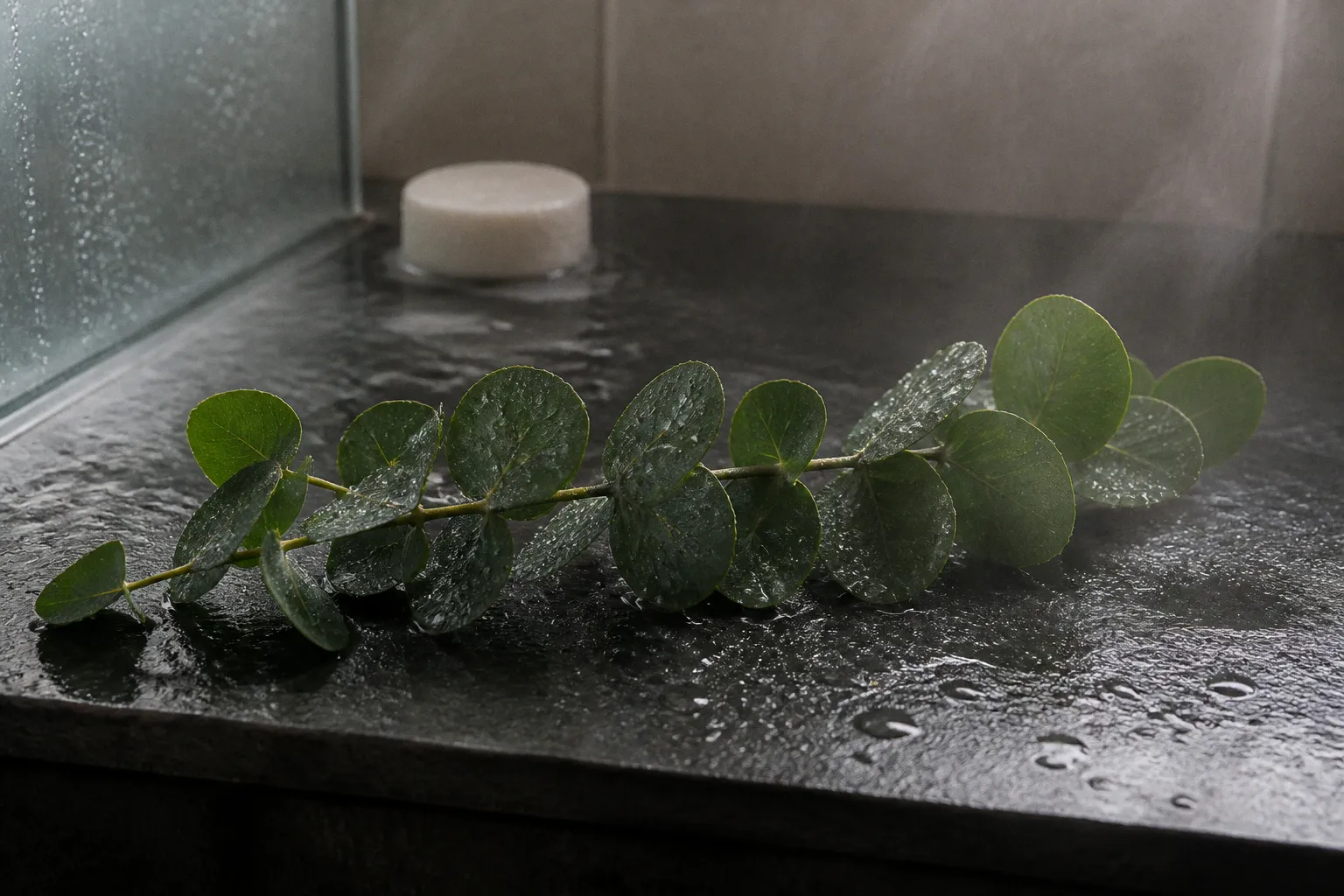
Essential oils provide direct control over composition and concentration. Fresh plant bundles add botanical material and visual structure but offer less predictable scent output.
Compare car rental deals in United Kingdom
See available offersPartner link — DiscoverCars comparisonThe shower environment changes the delivery system. Warm steam increases humidity, carries volatile molecules through an enclosed space, and allows aromatic compounds to reach the olfactory system more efficiently than in a dry room with passive fragrance. This can support a relaxation ritual. It does not make aromatherapy a treatment for clinical anxiety, respiratory disease, or any other medical condition.
For most users, the choice is not between a universally effective and ineffective product. It is a choice between convenience, formulation control, maintenance, and exposure management.
The olfactory connection: how shower steam affects aroma
Aromatherapy begins with volatile molecules entering the nasal cavity. Odor signals are processed through the olfactory system, which has connections with brain regions involved in emotion and memory. The practical result is that an aroma can influence perceived mood and the structure of a routine. The mechanism is sensory and contextual. It should not be confused with a pharmacological treatment.
A warm shower provides several physical advantages for fragrance distribution:
- Humidity increases the movement of volatile compounds through the air. Aromatic molecules evaporate from a steamer, plant surface, or diffuser and disperse through the warm, enclosed atmosphere.
- Steam reduces the need for a high fragrance load. A small amount of aromatic material can become noticeable in a compact bathroom more quickly than in a large, dry room.
- The exposure is time-limited. A shower normally creates a short ritual rather than continuous fragrance saturation.
- Ventilation still matters. An enclosed room can concentrate vapors. Excessive fragrance may produce irritation, headache, coughing, or nausea rather than relaxation.
Lavender and eucalyptus are common in shower rituals for different reasons. Lavender is typically selected for an evening or low-stimulation routine. Eucalyptus is associated with a sharper, more penetrating profile and is often used for a sense of respiratory clarity. Sweet orange adds a citrus profile. Peppermint produces a cooling, intense aromatic impression and requires more restraint in a small, humid room.
The botanical origin of an ingredient does not determine its safety by itself. Essential oils are concentrated mixtures. Their exposure profile depends on the oil, amount, delivery method, ventilation, and individual sensitivity.
Steam improves aromatic dispersion. It does not remove the need for dose control.
The strongest shower aromatherapy setup is not necessarily the one with the most noticeable scent. High intensity can increase sensory load without improving the ritual. A controlled, moderate release is more compatible with repeated use.
Shower steamers: the science of fizz and vapor release
A shower steamer is a compact tablet formulated around an acid–base reaction. Baking soda provides the alkaline component. Citric acid provides the acid component. When water reaches the tablet, the ingredients react and release carbon dioxide. The tablet dissolves, while fragrance materials are dispersed into the surrounding moisture and air.
The formulation has two separate functions:
1. The baking soda and citric acid system creates the fizzing reaction.
2. The fragrance phase supplies the aromatic vapors.
These functions are not interchangeable. A steamer is not a bath bomb with a different shape. Shower steamers can contain a relatively concentrated fragrance load and are designed for indirect inhalation in the shower environment. They should not be placed in bathwater or used as direct skin products.
Placement controls release rate
Direct water spray is the main variable affecting steamer longevity. A tablet placed under the shower stream can dissolve rapidly. A tablet placed on a ledge or in the corner of the shower floor receives intermittent splashes and releases fragrance more gradually.
The most practical placement is:
- On a shower ledge away from the direct stream.
- In the corner of the tub or shower floor where water reaches it indirectly.
- On a dry, stable dish with drainage if the surface is vulnerable to residue.
- Away from standing water, because continuous exposure shortens the release period.
The tablet should not obstruct the drain. Residual oils and undissolved powder can make some surfaces slippery, particularly when combined with body wash, conditioner, or soap residue. The area should be rinsed if a film develops.
Advantages of shower steamers
Steamers are the most standardized option for users who want a short, repeatable ritual. Each tablet provides a pre-portioned amount of the formulation. There is no need to measure individual essential oils or maintain a plant bundle.
Their main strengths are:
- Low setup time. The tablet is placed and activated by light splashes.
- Consistent format. A product line can offer distinct profiles such as lavender, eucalyptus, sweet orange, or peppermint.
- Portable storage. Dry tablets occupy little space and do not require water or sunlight.
- Fast activation. Fizzing begins when moisture reaches the surface.
- Clear separation from skincare. The product is used for atmospheric fragrance rather than applied to the body.
Their limitations are equally specific:
- Less formulation control. The user cannot easily adjust the ratio of lavender to eucalyptus once the tablet is made.
- Moisture sensitivity. Humidity during storage can trigger premature reaction and reduce performance.
- Single-use packaging. Repeated use creates more product waste than a reusable diffuser or plant bundle.
- Variable scent quality. Fragrance intensity depends on tablet composition, storage conditions, placement, and the stability of the volatile compounds.
- Potential residue. Some formulas leave powder or oil on the shower surface.
A properly stored steamer should remain dry until use. A sealed container is preferable to an open shelf inside a humid bathroom. If a tablet has softened, fractured, or lost its characteristic dry texture, its release behavior may be altered.
Essential oils in the shower: maximum control, higher exposure responsibility
Pure essential oils offer the greatest flexibility among the main aromatherapy shower options. The user can select a single oil, combine oils, or change the profile according to the time of day. That control also creates the highest risk of casual overuse.
Essential oils are not water-soluble in the ordinary sense. A few drops added directly to shower water will not disperse evenly. Concentrated droplets may remain on the surface, contact the skin, or accumulate on the shower floor. This creates both irritation and slip risks.
Direct application of undiluted essential oils to the skin is not an appropriate substitute for atmospheric diffusion. The shower should not be treated as a large mixing vessel.
Safer delivery formats
A bathroom diffuser designed for essential oils provides the most controlled way to use oils as an atmospheric product. It separates the oil reservoir from direct water contact and allows the user to stop the release. Placement outside the direct shower stream is necessary unless the device is specifically rated for bathroom humidity and water exposure.
Other delivery approaches can work if they prevent concentrated oil from contacting skin or flooring:
- A purpose-built shower diffuser can disperse a measured amount into the room.
- An absorbent shower-safe accessory can hold a small amount of oil away from the body and drain.
- A pre-formulated shower product can combine fragrance with a carrier system designed for that use.
- A passive bathroom diffuser can provide background scent before or after the shower, although it may not benefit from steam in the same way.
The phrase “a few drops” is not a universal dosage. Different oils vary in volatility, odor intensity, sensitization potential, and skin-irritation profile. Peppermint, eucalyptus, and some citrus oils can feel disproportionately intense in a small, humid space. The correct quantity is the minimum amount that produces a detectable but tolerable atmosphere.
Formulation variables that matter
A cosmetic chemist would distinguish between volatile release, skin contact, and emulsification. These are separate formulation problems.
- Volatile release concerns how quickly aromatic molecules leave the product and enter the air.
- Skin contact concerns whether the oil is diluted, dispersed, and compatible with the intended body area.
- Emulsification concerns whether oil and water are combined using a suitable surfactant or emulsifier.
Water alone does not emulsify essential oil. A product that claims to disperse oil in bath or shower water requires a properly designed system. A homemade mixture of water and essential oil can separate during storage and use.
Comedogenic scale is not the primary safety framework for shower aromatherapy. Comedogenic ratings are inconsistent, substrate-dependent, and mainly relevant to leave-on products used on acne-prone skin. For essential oils in a shower environment, irritation, sensitization, inhalation tolerance, photoreactivity, and slip risk are more relevant variables.
People with asthma, fragrance sensitivity, migraine triggers, or respiratory irritation should use particular caution. Children, pets, and pregnant individuals may require additional restrictions depending on the oil and exposure route. Medical conditions should not be managed with shower fragrance. A healthcare professional is the appropriate source for condition-specific advice.
Shower steamers vs essential oils
| Parameter | Shower steamers | Essential oils |
|---|---|---|
| Composition | Baking soda, citric acid, fragrance or essential oils | Concentrated volatile plant extract |
| Release control | Controlled by tablet placement and water exposure | Controlled by oil selection, amount, and diffuser settings |
| Custom blending | Usually limited to the product formula | High flexibility |
| Setup | Place a dry tablet in the shower | Requires a diffuser or suitable absorbent delivery method |
| Skin-contact risk | Lower when used as directed, but tablet is not a bath product | Higher if oil reaches skin or shower surfaces undiluted |
| Storage | Must be protected from humidity | Requires a closed, light-resistant container |
| Best use case | Fast, repeatable, low-preparation ritual | Custom fragrance profile and adjustable intensity |
| Main failure mode | Premature dissolving or weak release | Overdosing, poor dispersion, or direct contact |
Fresh plant bundles: botanical material with less predictable output
Fresh eucalyptus bundles are the most visible option in the shower aromatherapy comparison. They provide a botanical element, occupy no electrical outlet, and can remain in the shower as part of the room setup. Their aromatic output depends on plant freshness, stem condition, humidity, temperature, and the amount of water reaching the leaves.
The bundle should be hung away from the direct stream. Heavy exposure to water accelerates deterioration and can leave plant debris on the floor. Light steam and incidental splashes are more suitable. Crushed or bruised leaves release aroma more readily, but excessive handling also accelerates degradation.
Fresh plants differ from steamers and oils in one important respect: the user cannot specify a measured release rate. The plant material is a living or recently harvested source of volatile compounds. Its scent gradually changes as the leaves lose moisture and the bundle ages.
Benefits of fresh eucalyptus and other plants
- Low technical complexity. No fizzing reaction, battery, or liquid reservoir is required.
- Visual integration. The bundle provides a visible botanical cue for the ritual.
- Passive activation. Warm humidity increases the release of naturally occurring aromatic compounds.
- Reusable short-term format. A bundle can remain in place across several showers, although its useful period varies.
- No need for direct skin application. The material functions as an atmospheric botanical.
The limitations are practical:
- Uncertain longevity. There is no reliable universal duration for scent intensity.
- Variable concentration. Fresh plant bundles do not deliver a standardized amount of aromatic material.
- Maintenance. Leaves can wilt, darken, shed, or develop an unpleasant odor as they deteriorate.
- Potential sensitivity. Plant-derived vapors can still irritate sensitive users.
- Limited blending control. Combining eucalyptus with lavender or citrus requires separate plant materials and produces an imprecise profile.
Eucalyptus is not a decorative substitute for a safe product format. It should not be ingested, and the bundle should remain inaccessible to children and pets. The shower surface must be monitored for leaves and stems that could enter the drain or create a slip hazard.
Shower steamers vs eucalyptus bundles
| Parameter | Shower steamers | Fresh eucalyptus bundle |
|---|---|---|
| Fragrance source | Formulated tablet with fragrance phase | Fresh plant material |
| Activation | Light splashes and dissolution | Warm humidity and incidental moisture |
| Scent profile | Defined by the formula | Changes with plant condition |
| Intensity control | Placement and water exposure | Mostly determined by bundle size and freshness |
| Maintenance | Dry storage before use | Hanging, replacement, and debris removal |
| Aesthetic effect | Minimal after placement | Stronger visual botanical presence |
| Predictability | Higher between uses if stored correctly | Lower because freshness varies |
| Waste profile | Single-use tablet | Organic material, plus tying or hanging material |
Selecting the method by the actual objective
The best shower aromatherapy method depends on the task. A user who wants an immediate, low-effort routine has a different requirement from someone who wants to construct a specific fragrance blend.
Choose shower steamers when:
- The ritual should take less than a minute to prepare.
- A pre-formulated scent is acceptable.
- Storage space is limited.
- The user wants a disposable, measured format.
- Fragrance should be released only during the shower.
- The shower can accommodate a dry ledge or corner away from direct spray.
Choose essential oils when:
- The user needs control over the aromatic profile.
- A bathroom diffuser or purpose-built delivery accessory is available.
- The user understands that essential oils are concentrated materials.
- The amount can be kept low and adjusted gradually.
- Direct skin and floor contact can be prevented.
Choose fresh plants when:
- Visual botanical structure is part of the ritual.
- Some variation in scent is acceptable.
- The bundle can be maintained and replaced when it deteriorates.
- The shower has a secure hanging point.
- The user prefers passive release over a formulated single-use product.
The comparison becomes less favorable when the user wants all three of these properties at once: precise dosing, zero maintenance, and a reusable material. No option provides them simultaneously.
Optimizing scent longevity and exposure
Placement determines more than scent strength. It affects dissolution, evaporation, product waste, surface safety, and how quickly the room becomes saturated.
For shower steamers, indirect water exposure is the central control. A tablet under the stream will produce a rapid release and a short service period. A tablet placed in a corner receives light splashes and lasts longer. The tablet should be removed after use if the bathroom remains humid for extended periods.
For essential oils, the diffuser should be positioned where vapor can circulate without placing the device near direct water spray. The release should begin at a low level. Increasing the amount because the scent is not immediately obvious can lead to excessive concentration after the room warms and humidity rises.
For fresh plant bundles, the stems should be secured above shoulder level or in another position that prevents contact with the body and keeps loose material away from the drain. The bundle should be inspected regularly. A stale, moldy, or decomposing plant should be discarded rather than refreshed with additional oil.
A basic operating sequence is sufficient:
1. Select one primary aromatic direction. Lavender supports a lower-stimulation evening profile. Eucalyptus and peppermint are more penetrating. Sweet orange changes the profile toward citrus.
2. Start with the lowest practical intensity. A small bathroom requires less aromatic material than an open room.
3. Keep the delivery method away from direct skin contact. This is essential for tablets, oils, and plant bundles.
4. Control water exposure. Light splashes preserve a steamer and reduce residue. Direct spray accelerates dissolution.
5. Ventilate after the shower. This limits prolonged vapor accumulation and reduces room humidity.
6. Clean the surface when necessary. Oil residue combined with soap can create a slippery film.
7. Stop using the product if irritation appears. Coughing, burning, headache, rash, or breathing difficulty are not signs of effective aromatherapy.
The same principles apply to related bath self-care rituals. Fragrance should be treated as a controlled environmental input, not as a substitute for formulation discipline.
The most reliable setup is the one that controls contact, release rate, and cleanup without adding steps the user will abandon.
A strict do-and-don’t guide
Do
- Do place shower steamers at the edge of the water path, not beneath the full stream.
- Do store tablets in a dry, sealed container to protect the baking soda and citric acid reaction system.
- Do use a bathroom diffuser designed for essential oils when working with pure oils.
- Do begin with a low aromatic load and increase only if the room remains comfortable.
- Do keep oils, tablets, and plant bundles away from eyes, mucous membranes, children, and pets.
- Do remove deteriorated eucalyptus or other fresh plants.
- Do ventilate the bathroom after use.
- Do treat slippery residue as a formulation and cleaning problem, not as an unavoidable part of the ritual.
Don’t
- Don’t use shower steamers as bath bombs. Their formulation and fragrance concentration are intended for shower-floor vapor release, not direct immersion.
- Don’t pour undiluted essential oil into shower water. It will not disperse reliably and may contact skin or flooring.
- Don’t apply pure essential oils directly to the body as a shortcut to stronger aromatherapy.
- Don’t place a steamer under continuous water spray unless rapid dissolution is the intended result.
- Don’t assume that natural plant material is automatically non-irritating.
- Don’t continue exposure through coughing, burning, headache, nausea, or breathing discomfort.
- Don’t use a diffuser near electrical hazards or direct water spray.
- Don’t claim that any of these methods treats anxiety or a medical condition.
Shower steamers are the most practical default for a controlled, low-preparation ritual. Essential oils are the most flexible but require the greatest technical discipline. Fresh eucalyptus and other plant bundles provide the strongest botanical presence and the least standardized output.
For repeated use, the decision is straightforward: choose the steamer for consistency, the oil diffuser for customization, and the plant bundle for visual and botanical integration. In all three cases, moderate exposure, indirect contact, dry storage where applicable, and ventilation determine whether the ritual remains useful rather than becoming a source of irritation or maintenance.