Stress relief bath: your four-stage relaxation route
A stress relief bath works best when it is treated as a transition, not simply a tub filled with hot water.
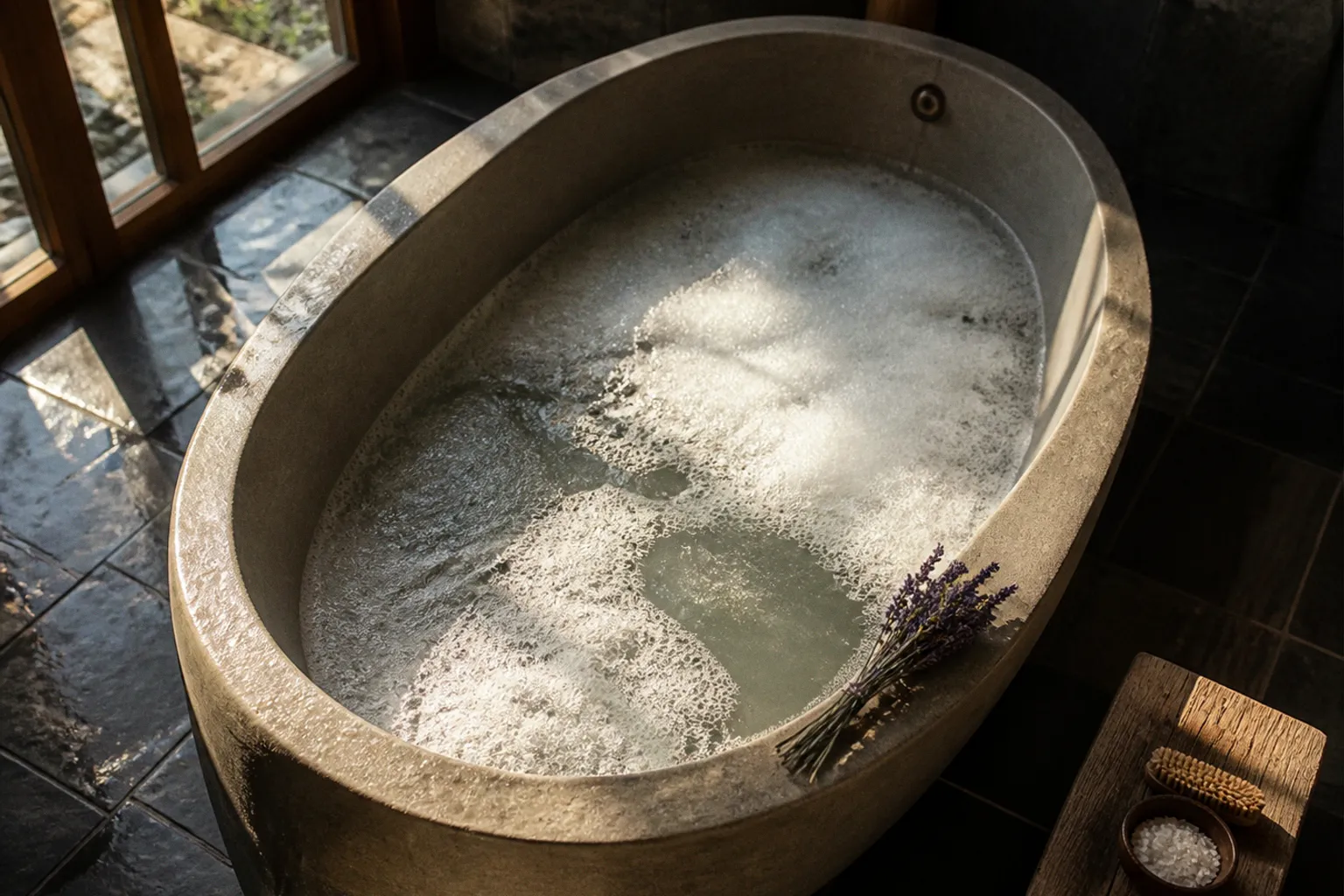
The water temperature, the scent in the room, the mineral blend, the length of the soak, and the care that follows all influence how your body receives the ritual. Miss one of these points and the bath may leave you flushed, thirsty, or coated in an overly fragrant film rather than genuinely settled.
In my botanical formulation practice, I think of the stress relief bath ritual milestones as four connected stages: cleansing before immersion, preparing the water and atmosphere, soaking with deliberate timing, and restoring the skin afterward. Each stage has a practical purpose. Together, they create an evening bath self care routine that feels less like another task and more like a reliable route out of the day.
Stage one: cleanse before you ask the body to rest
The first step is easy to overlook because it appears to be part of ordinary hygiene. It is not quite the same thing. A brief shower before the bath separates cleansing from relaxation, allowing the time in the tub to become quieter and less functional.
This approach appears in traditional bathing practices where washing happens before entering the soaking water. The logic is simple: remove sweat, sunscreen, body products, and environmental residue first, then reserve the bath for warmth and decompression. You are not trying to scrub your skin into a state of submission. A gentle cleanser and a thorough rinse are enough.
That distinction matters for the skin barrier. If you enter the bath already covered in cleansing oils, heavy fragrance, or a layer of perspiration, the warm water has more work to do. If you follow the shower with vigorous exfoliation, the combination of friction and prolonged immersion can leave the surface feeling tight. For a stress relief bath, I prefer a clean but unchallenged skin surface.
Keep the pre-soak shower comfortably warm rather than very hot. Your goal is to arrive at the tub with your body receptive to warmth, not already overheated. A few minutes is sufficient for most evenings.
Prepare the room before you turn on the water
The bath itself is only one part of the sensory field. A relaxation ritual becomes more effective when the surroundings stop asking for attention.
Before filling the tub, gather:
- A clean towel and a robe, so you do not need to search for them afterward.
- A body butter or lightweight body oil for immediate post-bath application.
- A glass of water, particularly if the room is warm or the bath follows exercise.
- Low, gentle lighting rather than a bright overhead fixture.
- A fragrance source that remains subtle: a candle, diffuser, or properly diluted bath-safe aromatic product.
- A dry place for your phone, preferably outside the bathroom.
Scent can guide the mood of the room, but it should not dominate the water. Essential oils are highly concentrated aromatic materials, not interchangeable with fragrance drops. They require an appropriate dispersing system in bath products because essential oils do not dissolve safely in water on their own. Undiluted drops floating on the surface can contact the skin in concentrated patches and may cause irritation.
For that reason, I reach for a professionally formulated bath oil, bath salt blend, or emulsified bath product rather than improvising with essential oil directly in the tub. The carrier matters. A well-designed carrier distributes aromatic materials and contributes its own lipid profile, viscosity, and after-feel. Sweet almond, jojoba, sunflower, and apricot kernel carriers each create a different finish, from silky and light to more cushioning and substantial.
The most calming bath is not the hottest one. It is the one that gives your body warmth without asking your skin barrier to pay the price.
Stage two: build the water around your nervous system and your skin
The central technical decision in a stress relief bath is water temperature. Very hot water can feel immediately comforting, but that first rush of heat is not the same as sustained relaxation. Excessively hot water can strip moisture from the skin, induce fatigue, and leave you feeling depleted when you stand up.
Aim for approximately 37–38°C, or 98–100°F. This range sits close to body temperature, allowing the muscles to soften without creating an aggressive heat load. It is warm enough to support the transition into rest while remaining more considerate of the skin barrier than scalding water.
If you do not use a bath thermometer, the water should feel distinctly warm but not sharp, prickly, or difficult to enter. Your shoulders should not redden quickly, and you should not need to acclimatize by lowering one limb at a time. If the bath makes you sweat heavily, feel light-headed, or notice a racing heartbeat, drain some water or step out.
The nervous system response is part of the reason a warm bath can be useful in an evening routine. Warm immersion encourages the body toward parasympathetic activity, the state associated with rest and recovery. The bath cannot replace treatment for clinical anxiety or other medical conditions, but it can provide a clear physical boundary between stimulation and quiet.
Choose the sensory profile before adding ingredients
Aromatic design is more successful when you begin with the desired olfactory notes rather than adding every ingredient associated with relaxation.
For an evening bath, I usually think in three levels:
1. Primary notes create the first impression. Lavender, Roman chamomile, or a soft floral accord may feel immediately gentle, while bergamot or sweet orange can make the room brighter and more open.
2. Secondary notes give the blend body. Cedarwood, frankincense, clary sage, or a restrained herbal note can prevent a floral blend from becoming thin or overly sweet.
3. Trace notes provide lift or finish. A small amount of citrus peel, resin, or green botanical nuance may be enough to complete the profile without taking over.
This is where synergy becomes practical rather than decorative. A blend does not need a long ingredient list. It needs proportion. If the first impression is too intense, the bath becomes another source of sensory input. If every note is soft and dense, the fragrance may feel flat. The best bath aroma stays present at the edge of awareness.
For a candle, soy wax is often a useful choice in the room because it offers a clean, steady atmosphere when properly made and burned safely. Keep the flame away from towels, curtains, oils, and the edge of the tub. A candle should support the bath ritual, not turn it into a fire-safety exercise.
Add minerals with a measured hand
Bath salts can make the immersion feel more substantial, particularly when the body is carrying muscular tension. A blend containing magnesium salts or Epsom salts is commonly used for this purpose. For a full tub, 1 to 2 cups is a practical range.
The texture of the bath changes depending on the salt grain. Fine crystals dissolve quickly and leave a smoother water experience. Coarser grains create a more tactile ritual but may need additional time and movement to dissolve fully. If the blend contains dried botanicals, inspect how they are packaged. Loose petals and leaves can be beautiful, but they may collect around the drain and create more cleanup than your evening energy can support.
The aromatic and mineral components should be considered separately. Salts add body to the ritual, but they do not automatically make an essential oil blend bath-safe. If fragrance is included, look for a product designed for immersion, with the carrier or dispersing system already handled.
The same restraint applies to bath bombs. Their fizzing action is enjoyable, but a heavily colored or strongly fragranced formula may not suit every skin type. If your skin tends to sting after bathing, choose a simpler mineral soak or an unscented bath oil and observe how your skin responds.
Stage three: let the soak have a beginning and an end
The third stage is the part most people imagine when they hear “stress relief bath,” but timing determines whether it feels restorative or draining. The ideal soaking window is generally 15 to 30 minutes.
Fifteen minutes can be enough when you are short on time or already tired. Thirty minutes gives the warmth more time to settle into the muscles and allows the sensory environment to become familiar. Beyond that, the benefits do not necessarily continue to increase. Prolonged immersion can contribute to dryness, sluggishness, and that over-softened feeling on the fingertips.
I recommend entering the bath with one simple intention for the next few minutes: lower stimulation. That may mean no phone, no podcast, and no attempt to turn the tub into a productivity station. If you prefer sound, choose something with a consistent volume and gentle pacing. The point is not to create an impressive ritual. The point is to reduce the number of decisions your mind must make.
A useful rhythm is:
- Spend the first few minutes allowing your body to adjust to the water.
- Let the middle portion become the quietest part of the bath.
- Use the final few minutes to notice whether you feel comfortably warm, sleepy, thirsty, or ready to leave.
That last check prevents the bath from ending abruptly. Relaxation is easier to carry into the next part of the evening when you step out before the water becomes uncomfortable.
The bath relaxation stages are physical, not theatrical
The body often communicates the progress of the ritual through small changes:
- The jaw releases slightly.
- The shoulders lower away from the ears.
- Hands stop clenching.
- Breathing becomes slower without being forced.
- The legs feel heavier and less restless.
- The skin feels warm but not overheated.
You do not need to perform deep breathing or adopt a particular posture. If a few slower breaths feel comfortable, use them. If they make you monitor yourself too closely, simply rest your attention on the water, the scent, or the sensation of your feet against the tub.
This direct sensory focus is useful because it keeps the ritual grounded. You are not trying to escape your body. You are giving it uncomplicated information: warmth, support, quiet, and time.
A good aromatherapy bath does not need to overpower the room. Its fragrance should meet you gently, then leave enough space for your own breathing.
Stage four: protect the calm after immersion
The final stage begins before you drain the water. Move slowly when you stand, especially if the bath has made you warm or drowsy. Pat the skin dry rather than rubbing it vigorously. The goal is to leave a fine veil of moisture on the surface so your emollient can spread easily.
This is where body oil and body butter behave differently.
| Product | Best moment | Skin feel | What it contributes |
|---|---|---|---|
| Body oil | On slightly damp skin | Slip, sheen, and a flexible finish | Lipids that help reduce the feeling of moisture loss |
| Body butter | After patting dry, or over a small amount of oil | Cushioned, rich, and protective | A denser blend of butters and oils for dry areas |
| Lightweight lotion | When you dislike an oily finish | Quick absorption and a softer after-feel | Water-based hydration with a lighter surface finish |
| Bath oil | During immersion, only when formulated for bath use | Silky water and a soft skin finish | A carrier system designed to distribute oils more evenly |
The best choice depends on your skin and your tolerance for viscosity. A high-viscosity body butter can be wonderful on shins, elbows, knees, and hands, but it may feel excessive over the entire body if you prefer a quick finish. A lighter carrier oil can spread more quickly and leave the skin supple without a heavy coating.
For very dry skin, I often layer textures rather than applying a large amount of one product. Press a few drops of body oil onto damp legs and arms, then place a small amount of butter over the areas that lose moisture fastest. The oil provides glide; the butter adds a more occlusive cushion. Together, they create a better sensory balance than repeatedly rubbing in a thick product on completely dry skin.
Pay attention to the formula’s lipid profile. Shea butter, mango butter, cocoa butter, jojoba, sunflower, oat, and apricot kernel oils do not feel identical on the skin. Some are dense and protective, some are quick and silky, and some bring a distinctive natural aroma that changes the final olfactory notes of a scented body product.
Extend the ritual without adding another project
The post-bath period should be quiet and uncomplicated. Put on soft clothing, drink water, and keep the next activity low in stimulation. If you are building an evening bath self care routine, repeatability matters more than decoration. A ritual that requires six products, a complicated playlist, and extensive cleanup will eventually become a postponed ritual.
One to three relaxation baths per week can fit comfortably into a broader self-care rhythm, depending on your skin, schedule, and access to a tub. On other evenings, a warm shower followed by body oil, a foot soak, or a few minutes beside an essential oil diffuser can provide a shorter version of the same transition. The bath is one route, not the only route.
A diffuser should also be used with restraint. Keep it in a ventilated space and follow the device’s instructions. Strong fragrance can become irritating, particularly in a small bathroom. If the scent begins to feel loud, the right response is to reduce the amount or turn it off, not to endure it in the name of relaxation.
A practical four-stage formula for different evenings
The same framework can be adjusted according to what your body needs. The structure remains stable, while the ingredients and duration change.
| Your evening | Water and timing | Mineral or aromatic direction | Post-bath finish |
|---|---|---|---|
| Mentally overstimulated | 37–38°C, around 15 minutes | Low fragrance, soft floral or woody notes | Lightweight body oil and dim light |
| Muscularly tense | 37–38°C, 20–30 minutes | 1–2 cups of magnesium or Epsom salts; gentle scent | Rich body butter on shoulders, legs, and feet |
| Skin feels dry or tight | Warm rather than very hot, 15–20 minutes | Minimal salts and a bath-safe oil formula | Apply oil immediately, then butter to dry patches |
| Sleep routine needs a boundary | 37–38°C, 20 minutes | Consistent evening blend with modest intensity | Robe, water, and no stimulating screen afterward |
The table is not a prescription. It is a way to keep the ritual responsive. The same temperature can feel different depending on the room, your hydration, your energy level, and how long you have been active. Your skin’s feedback should have the final word.
Common details that quietly undermine the ritual
A few habits can shift the experience in the wrong direction:
1. Turning the temperature up because the day was difficult. More heat is not a stronger form of comfort. It can increase dryness and leave you fatigued.
2. Pouring essential oil directly into the water. Water does not disperse essential oil safely. Use a properly formulated product with a suitable carrier or dispersant.
3. Staying in until the water is cold. A defined 15–30 minute window gives the bath a natural close and reduces the chance of over-soaking.
4. Using fragrance as a substitute for atmosphere. A loud blend cannot compensate for harsh lighting, a ringing phone, or a cold towel.
5. Applying body butter to completely dry skin. A little residual dampness improves spreadability and makes a rich formula feel less draggy.
6. Adding too many new ingredients at once. If your skin reacts, you will not know whether the cause was the salt, fragrance, dye, botanical material, or carrier.
7. Standing quickly after a long, warm soak. Take a moment at the edge of the tub and rise carefully.
These are small corrections, but bath rituals are built from small corrections. Comfort comes from the relationship between temperature, time, texture, and scent.
How to make the ritual distinctly yours
Personalization does not require rare botanicals. Start with one sensory anchor. Perhaps it is the viscosity of an oil that leaves your hands silky rather than slick. Perhaps it is the olfactory note of lavender softened by cedarwood. Perhaps it is the clean mineral feel of an unscented salt bath followed by a warm body butter.
Once you know the anchor, keep the rest quiet. If the bath oil has a rich aromatic profile, use an unscented candle. If the candle fills the room with fragrance, choose a neutral bath soak. This creates balance and protects the nervous system from a crowded sensory field.
I also recommend keeping a small record of what works: water temperature, approximate duration, product texture, and whether your skin felt comfortable afterward. Not a formal diary—just enough information to recognize patterns. You may discover that your skin prefers a shorter soak, that a certain carrier feels too heavy before bed, or that citrus notes suit the beginning of the evening while a softer floral accord works better later.
The most useful stress relief bath guide is one that helps you make those observations without turning relaxation into performance.
The route is simple: prepare, immerse, restore
A stress relief bath ritual is most dependable when its milestones follow the body’s actual needs. Cleanse first so the bath can be restful. Set the water around 37–38°C rather than chasing intense heat. Use minerals and aromatics in formulations that respect the skin. Soak for 15–30 minutes, then step out before warmth becomes fatigue. Finish with a carrier-rich oil or body butter while the skin is still slightly damp.
That is the full route. There is no need to make it elaborate, mystical, or expensive. The quality lies in the details: a measured temperature, a restrained olfactory profile, a thoughtful lipid blend, and enough time for the body to recognize that the day has changed direction.