Skin barrier repair stages with whipped body butter
Tight, papery skin after a hot shower is usually not a sign that you need a more fragrant lotion. It is a sign that water has left the skin surface faster than your barrier could retain it.
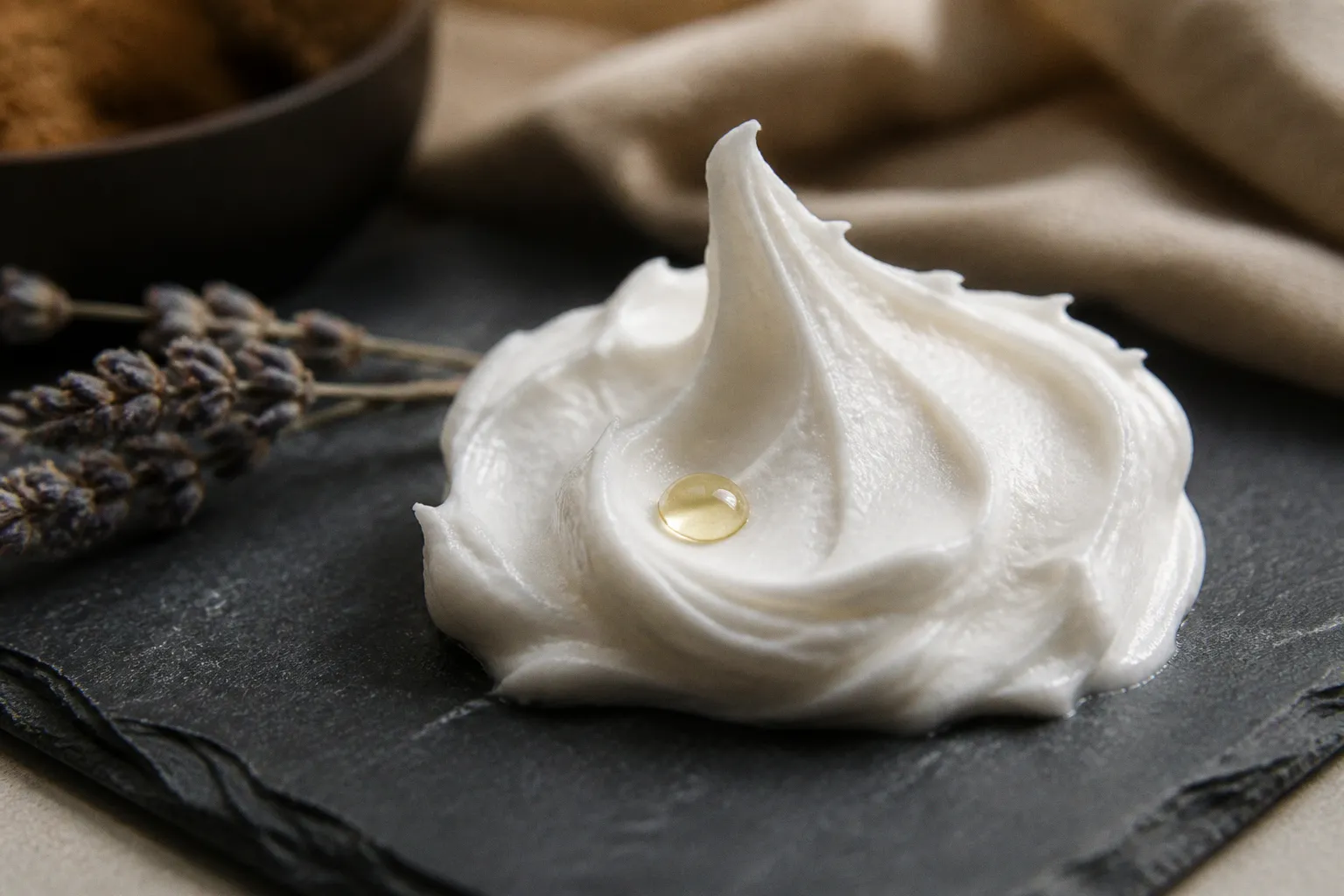
When the stratum corneum is disrupted by heat, cleansing, friction, dry air, or repeated washing, the immediate task is not to add water alone. It is to slow its escape and replenish the lipids that help the outer skin layers hold together.
This is where whipped body butter can be useful for skin barrier repair. A well-formulated blend of shea, mango, or cocoa butter supplies a rich occlusive and emollient layer, reducing transepidermal water loss while softening rough surface cells. But the timeline matters. Your skin may feel calmer within a day or two; the deeper architecture of the barrier takes considerably longer to reorganize.
The bi-phasic timeline of epidermal recovery
I find it helpful to separate body skin recovery into two overlapping stages. The first is functional: the surface begins retaining water more effectively. The second is structural: the epidermis continues renewing and rebuilding its organization over several weeks.
These stages explain why a rich body frosting can feel transformative after one application without completely resolving long-standing dryness overnight.
Stage one: functional relief within 24 to 72 hours
The outermost layer of the epidermis, the stratum corneum, is often described as a brick-and-mortar structure. Corneocytes form the bricks, while an intercellular lipid matrix helps fill the spaces between them. When this matrix becomes depleted or disorganized, water moves outward more readily. The result is familiar: tightness, flaking, roughness, and a surface that seems to drink up every product you apply.
Plant butters act primarily at this functional level first. Their fatty components spread across the skin, fill some of the uneven surface texture, and create a more water-resistant film. Shea butter brings a substantial lipid profile that includes oleic, stearic, palmitic, and linoleic acids. Mango butter tends to have a firmer, drier-feeling viscosity, while cocoa butter contributes a more structured, protective finish.
The sensory change can be quick:
- Tightness may soften after the first application because the surface is no longer losing moisture as rapidly.
- Flaking can appear less pronounced as rough corneocytes are cushioned and held together by the emollient layer.
- Skin often feels more flexible within the first day or two, particularly on the shins, elbows, hands, and knees.
- Repeated application over 24 to 72 hours can support the early sealing of lipid gaps and improve moisture retention.
In controlled acute barrier-disruption models, young skin recovered approximately half of its barrier function within 24 hours and about 80% within 72 hours. That does not mean every dry patch follows the same schedule. Chronically irritated skin, over-exfoliated areas, and thickened zones such as heels may recover more slowly.
The distinction is important: early comfort is evidence of improved surface function, not proof that every underlying barrier disturbance has been repaired.
Stage two: structural renewal over 2 to 4 weeks
The epidermis continues to renew through a cycle that averages about 28 days, although the exact pace varies with age, body area, environment, and the condition of the skin. During this period, new cells move toward the surface while the stratum corneum gradually reorganizes.
A whipped body cream can support this process by maintaining a less dehydrated environment. It does not replace the skin’s own renewal cycle, and it cannot force severely compromised skin to rebuild in a single night. What it can do is reduce the daily moisture loss that keeps the surface brittle and reactive.
For moderate barrier damage, a more realistic dry skin recovery timeline is two to four weeks of consistent care. You may notice several smaller improvements along the way:
1. The first few applications improve slip and comfort. Skin feels less stretched when you move, bend, or dress.
2. After several days, texture becomes more even. The dry, powdery surface begins to feel less coarse under the fingertips.
3. During the second week, moisture retention becomes more dependable. The skin may remain comfortable for longer between applications.
4. By the third or fourth week, the barrier has had time to benefit from ongoing epidermal turnover. Persistent roughness should be reassessed rather than covered indefinitely with increasingly heavy layers.
Whipped body butter can reduce moisture loss quickly, but structural barrier recovery still follows the slower rhythm of epidermal renewal.
How plant butters support barrier repair
Not all rich textures perform in the same way. The word “butter” describes a family of plant-derived fats with different melting points, fatty acid profiles, spreadability, and after-feel. In formulation, I look at the blend as a small ecosystem rather than choosing an ingredient only because it feels luxurious in the jar.
Shea butter: flexible, cushioning, and versatile
Shea is often the first butter I reach for when the skin feels dry, tight, or mildly irritated. Its combination of oleic, stearic, palmitic, and linoleic acids gives it both softness and structure. It is emollient, so it smooths the spaces between rough surface cells, and occlusive, so it helps slow water loss.
Shea also contains compounds such as cinnamic acid and lupeol, which are associated with soothing support in botanical skincare. I would not treat shea body butter as a medical treatment for inflammation, but its sensory profile is often well suited to skin that feels over-cleansed or weather-stressed.
The finish depends heavily on processing. A softly whipped shea body butter may melt quickly against warm skin, creating a satin film. A cooler, more heavily aerated version can feel lighter at first but may become dense if stored in a warm room and then cooled again.
Mango butter: a cleaner, firmer viscosity
Mango butter is useful when you want substantial emollience without the pronounced drag that some unrefined shea formulas can have. Its firmer texture gives a body frosting more shape, while its spread tends to become smoother once it meets the warmth of the skin.
I often like mango butter in blends for the legs and arms, where the desired result is deep skin moisturization without a strongly greasy finish. It pairs well with softer oils that improve glide and prevent the final product from feeling waxy.
Cocoa butter: structure and persistence
Cocoa butter has a higher melting point and a more persistent film. It can make a whipped body cream feel protective for longer, especially on elbows, knees, and dry hands. The trade-off is viscosity: too much can create a stiff, draggy application, particularly in a cool room.
Its natural cocoa aroma also affects the olfactory notes of the finished blend. In an unscented product, that warmth may be part of the appeal. In an essential-oil formula, it needs to be considered as part of the overall aromatic balance rather than treated as an invisible base.
Carrier oils: the glide between butter and skin
A body butter made entirely from solid fats can feel dense. Carrier oils adjust the spread, absorption profile, and finish. Sunflower, jojoba, apricot kernel, or similar oils can introduce a more fluid lipid phase, allowing the butter to move across damp skin before it sets.
The carrier also changes how quickly the product seems to disappear. A formula rich in lighter oils may feel elegant but offer less of a persistent protective film. A formula dominated by hard butters may stay on the surface longer and feel more occlusive. Neither profile is automatically better; the correct choice depends on how dry the skin is, where the product is used, and whether you are applying it after bathing or before bed.
A practical blend usually has three levels:
- Primary ingredients: the main plant butters that establish the protective body and occlusive character.
- Secondary ingredients: carrier oils that control viscosity, spread, and absorption.
- Trace ingredients: botanical extracts, antioxidants, or aromatic materials that shape the formula’s stability and sensory identity.
Essential oils belong in the trace category and should remain modestly dosed. Dry or compromised skin often has a lower tolerance for fragrance, even when the aroma is beautifully composed. If a product stings, increases redness, or leaves the skin feeling hotter, the olfactory experience is no longer the priority.
The three-minute window after bathing
The most effective deep skin moisturization steps are often simple, but their timing matters. After showering or bathing, water remains temporarily on the skin surface. If you wait until the body is completely dry, much of that water has already evaporated.
Applying moisturizer or body butter within approximately three minutes of showering helps trap surface water before it is lost through transepidermal water loss. The goal is not to seal in a dripping layer. Pat the skin until it is damp rather than wet, then press and smooth the butter over the areas that feel tightest.
The sequence I recommend is:
1. Keep the water comfortably warm rather than very hot. Excess heat can intensify dryness and leave the skin feeling stripped before the butter ever touches it.
2. Use cleanser selectively. Apply it where sweat, sunscreen, or visible soil requires cleansing instead of treating the entire body as if it needs aggressive degreasing.
3. Pat, do not scrub, after rinsing. Rubbing with a rough towel can add friction to an already compromised surface.
4. Apply whipped body butter while the skin is still damp. Start with the shins, forearms, elbows, knees, and any area that feels tight.
5. Allow the butter to settle before dressing. A thin, even layer usually performs better than a heavy coating that remains tacky on the surface.
The texture should melt with body warmth and leave a flexible film, not a sealed plastic sensation. If the product pills, drags, or sits on the skin in greasy beads, the issue may be the formula, the quantity, or the amount of water left on the skin.
The butter is not supplying all the hydration by itself; it is helping the water already present on damp skin stay there longer.
Why body skin can tolerate heavier emollient support
Body skin generally has a thicker stratum corneum and a stronger inherent barrier than facial skin. That gives the arms, legs, torso, elbows, and feet more tolerance for rich creams and plant butters. The same dense formula that feels protective on a shin may feel excessive on the face, particularly in areas prone to congestion.
This does not mean every body area needs the same texture. Skin varies considerably across the body:
| Body area | Useful texture | Why it works |
|---|---|---|
| Shins and forearms | Soft whipped body butter with a fluid carrier oil | Cushions dry surface cells without excessive drag |
| Elbows and knees | Firmer butter blend with cocoa or mango butter | Provides a more persistent film over thicker, rougher skin |
| Hands | Medium-rich cream or butter applied after washing | Replenishes lipids repeatedly lost through cleansing |
| Heels and feet | Dense balm-like butter, often layered at night | Supports prolonged contact over hyper-keratinized areas |
| Chest and upper back | Lighter whipped body cream | Offers emollience with less occlusive weight in oilier zones |
The heavier texture should follow the location, not simply the severity of the problem. A very rich body frosting applied to the entire body may feel comforting at first but can become impractical under clothing. A lighter whipped body cream used consistently can outperform a dense product that you avoid because it feels sticky.
Dryness versus a more reactive condition
Dryness commonly presents as roughness, flaking, tightness, and reduced flexibility. A body butter can be appropriate when the skin is intact and the main need is moisture retention.
Persistent itching, cracking, oozing, pronounced redness, pain, or a rash that continues to spread requires a different level of attention. A rich plant-fat formula may sit comfortably over mild dryness, but it should not be used to mask symptoms that need clinical assessment. The absence of water in an oil-based product also matters: pure butter cannot hydrate skin on its own. It reduces water loss and improves softness when paired with dampness or a water-containing product.
Choosing a whipped body butter by formulation, not by the word “natural”
A product can be botanical and still be poorly matched to your skin. When I examine a whipped body butter, I pay attention to the relationship between the ingredient list and the intended use.
Look for a formula where:
- The main butters appear prominently enough to provide the promised viscosity and protective finish.
- Carrier oils are chosen to improve spread rather than merely inflate the ingredient list.
- The product is not so heavily fragranced that scent dominates the skin experience.
- The container protects the butter from repeated exposure to water, which can affect stability and introduce contamination.
- The texture remains reasonably consistent instead of separating into a hard waxy layer and a pool of oil.
- Antioxidant support is considered when the formula contains a substantial amount of delicate plant oils.
Whipped products also deserve a note of realism. Aeration changes the volume and the way the butter feels in the hand, but it does not make the formula intrinsically more hydrating. A jar may look large because air has been incorporated into the mixture. What matters for barrier support is the actual lipid composition, application habits, and compatibility with damp skin.
For a practical comparison:
| Formula profile | Best suited to | Sensory result | Potential limitation |
|---|---|---|---|
| Shea-dominant butter | General dry skin and daily body use | Cushioned, soft, slightly rich | Can feel draggy or earthy depending on processing |
| Mango-shea blend | Arms, legs, and everyday moisturizing | Smooth, creamy, less dense | May need a carrier oil for easier spread |
| Cocoa-mango blend | Elbows, knees, hands, and night care | Protective and persistent | Can feel firm or waxy in cooler conditions |
| Butter with lighter carrier oils | Damp-skin application after bathing | Faster glide and a lighter finish | May provide less staying power on very dry areas |
| Dense, nearly oil-free butter | Heels and heavily roughened zones | Long-lasting surface film | Less comfortable over large body areas |
A good formula should make the correct application easy. If you need to warm it aggressively, use a large amount, or rub until the skin turns pink, the viscosity is working against you.
Building a realistic recovery routine
For mild to moderate dryness, consistency is more valuable than dramatic application. I would rather see a thin layer of a well-balanced body butter applied after bathing most days than a heroic amount used once a week.
Morning and evening can serve different purposes. In the morning, use a moderate layer that can settle before clothing. At night, focus on the driest areas and use a more persistent formula on elbows, knees, hands, or feet. If the skin is especially rough, apply a water-based lotion first and follow with a small amount of butter to reinforce the lipid layer. This pairing gives the skin both water and an occlusive finish.
Avoid stacking multiple exfoliants while waiting for the texture to improve. Scrubs, strong acids, and frequent brushing may make rough skin feel temporarily smoother while extending the irritation that caused the dryness. A compromised barrier needs less friction and a steadier lipid supply, not a more aggressive polishing schedule.
You can use this progression to judge whether the routine is doing its work:
- Within the first application: less surface tightness and improved slip.
- Within 24 to 72 hours: more comfortable movement and reduced visible flaking if the dryness is primarily barrier-related.
- After one to two weeks: fewer periods of tightness between applications and a smoother surface.
- After two to four weeks: more stable texture as ongoing epidermal renewal supports the repaired lipid organization.
If there is no meaningful improvement after consistent care, reconsider the cleanser, shower temperature, frequency of exfoliation, fragrance exposure, and the product’s own ingredients. Sometimes the most luxurious butter is not the missing piece; the routine is continuing to remove more lipids than the product can replace.
Managing expectations from immediate relief to structural recovery
Whipped body butter skin barrier repair works best when you understand what the product can and cannot do. It can reduce transepidermal water loss, soften the outer surface, improve flexibility, and create conditions that support recovery. It cannot supply water where there is none, rebuild a severely compromised barrier overnight, or substitute for professional evaluation when symptoms are persistent or intense.
The first sign of success is not necessarily a dramatic glow. It is quieter: the skin no longer feels pulled tight after drying, the butter spreads without friction, and the comfortable window between applications gradually becomes longer.
Start with damp skin within three minutes of bathing. Choose a butter blend whose viscosity suits the body area. Use enough to leave a supple film, not a sticky coating. Keep the routine steady for at least several days before judging the early result, and allow two to four weeks for the deeper structural phase.
That is the most reliable route: water at the surface, lipids across the barrier, and enough time for the epidermis to complete its own work.