Should you apply body butter to damp or dry skin?
Damp skin is usually the better starting point for body butter, especially straight after a shower.
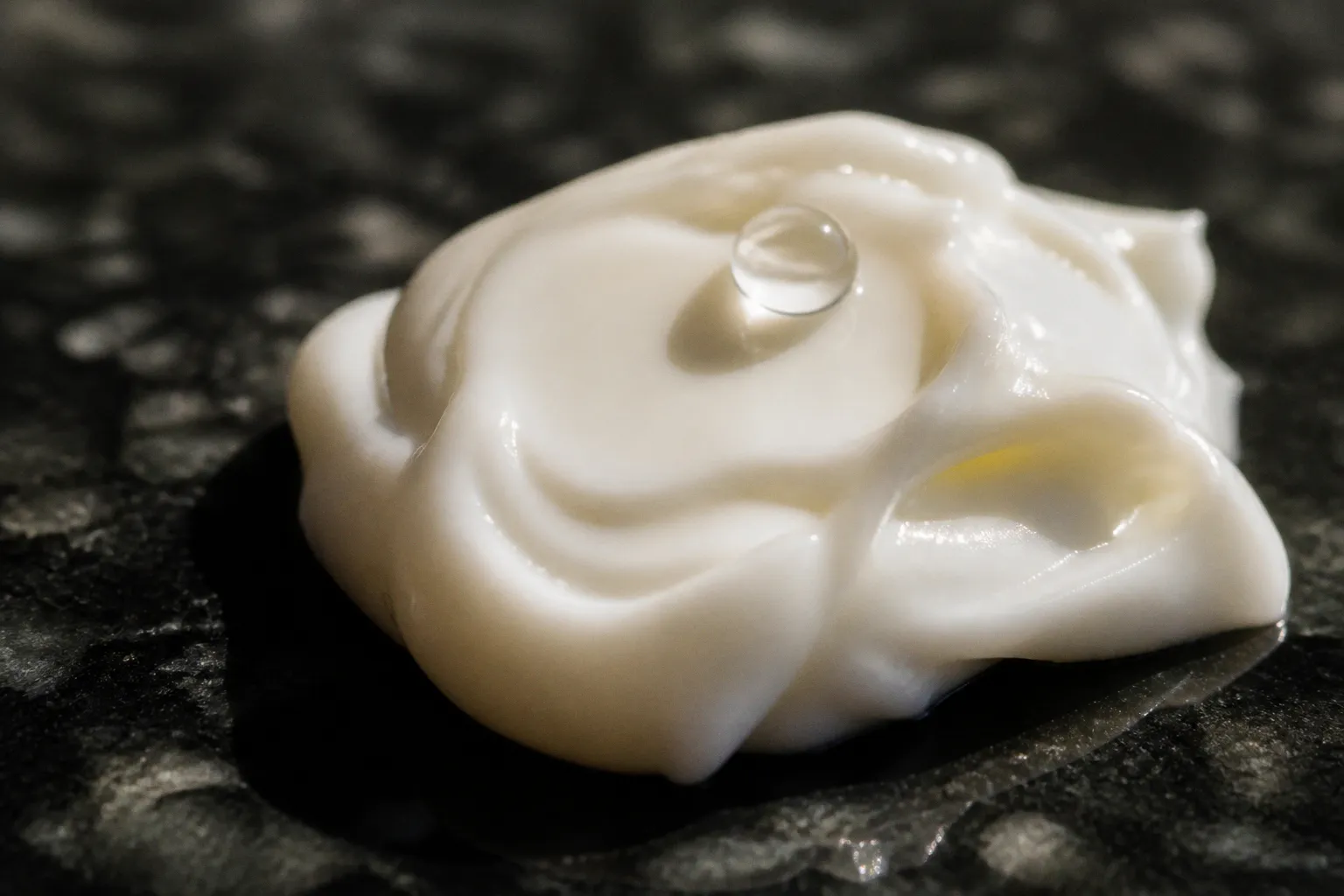
A thin layer of residual water helps the product spread more evenly, so you can use less and avoid the heavy, draggy finish that some rich butters leave behind.
But dry-skin application is not a mistake, and it is not pointless. Body butter can still soften the surface and form an occlusive layer when applied to completely dry skin. The difference is mostly in how the product behaves: on damp skin, it tends to glide and settle more comfortably; on dry skin, it may feel thicker, take longer to distribute, and remain more noticeable on the surface.
The useful distinction is not “right” versus “wrong.” It is what you want from the application. If your skin feels tight after showering, apply body butter while it is still slightly damp. If you are treating dry elbows, rough heels, or a patch that needs a protective layer overnight, applying it to dry skin can be entirely appropriate.
The Science of Anhydrous Skincare: Why Water Matters
Body butter is an anhydrous product, which means its formula contains little or no water. Shea butter, mango butter, cocoa butter, plant oils, waxes, and similar ingredients are rich in lipids rather than water-based humectant solutions.
That changes the product’s role. A lotion or cream with a water phase can feel hydrating because it brings water and water-attracting ingredients into the formula. Body butter is more concentrated in oils and fats. It mainly works by:
- reducing the amount of water that escapes from the outer layer of skin;
- softening rough, flaky areas;
- smoothing the feel of the stratum corneum;
- adding a protective lipid layer over the surface;
- reducing friction from clothing, bedding, and movement.
In other words, body butter does not need to be mixed with water to do anything useful. It can provide occlusion on dry skin. What damp skin changes is the application experience and the amount of water already present at the surface when you apply the product.
The outermost layer of skin, the stratum corneum, contains corneocytes surrounded by lipids. Its barrier is not a sealed plastic coating; it is a dynamic structure that helps regulate water loss and protect the skin from the outside environment. Washing, hot water, low humidity, friction, and harsh cleansers can all leave the surface feeling drier or more vulnerable. A rich butter can support that surface by filling some of the spaces between rough flakes and reducing evaporation.
The hydrolipid film also matters. This surface mixture of sebum, sweat, and water is not something that body butter simply replaces. Butter contributes mainly the lipid component. If there is still a little water on the skin after bathing, the product can spread through that moisture and leave a more comfortable film. If the skin is dry, the same product can still form a lipid layer; it simply has less surface moisture to distribute around.
Damp skin helps body butter spread. Dry skin does not cancel its benefits; it simply gives you a denser, more concentrated finish.
This is why the advice to apply body butter after showering is useful, but it should not be turned into a rigid rule. The product is not suddenly ineffective once the skin has dried. You have just moved from a lighter, easier application to a more deliberate one.
Why dry skin can feel greasier
When a thick butter meets dry skin, there is no thin water film to help it glide across the surface. The product has to be warmed and worked in mechanically. If too much is applied at once, it can remain as a visible layer, particularly on smooth areas such as the shins or forearms.
That layer is not necessarily doing nothing. Occlusive ingredients are supposed to remain, at least partly, on the skin’s surface. The problem is comfort and distribution: an uneven coating may feel sticky, transfer to fabric, or make you apply more product than you need.
Dry-skin application is often more successful when the goal is targeted protection rather than all-over moisturising. A small amount on cracked heels before bed, for example, may be preferable to covering the entire body in a thick layer. On the other hand, freshly towel-damp skin is often the easiest canvas for a whipped body butter application because the product moves more quickly and leaves fewer heavy patches.
Mastering the 3-Minute Post-Shower Window
The familiar three-minute recommendation is best understood as a practical habit, not a countdown that determines whether your routine has worked. After a shower or bath, water on the skin gradually evaporates. Applying an emollient while the surface is still damp helps reduce that water loss and keeps the routine efficient.
You do not need to apply body butter in a panic. If you get dressed, answer a message, or leave the bathroom before moisturising, your skin has not become impossible to treat. Apply the product when you can. Some residual moisture may still be present, and even fully dry skin can benefit from an occlusive layer.
The ideal moment is when the skin feels fresh and slightly moist but is no longer covered in running water. A practical sequence looks like this:
1. Finish the shower and step out. Use warm rather than very hot water if your skin is prone to dryness. Hot water can leave the surface feeling tight before you even reach for the product.
2. Pat, rather than scrub, with a towel. Remove excess water while leaving a light, even dampness behind. You do not need to rub the skin until it feels completely dry.
3. Take a modest amount of butter. Start with less than you think you need. Rich formulas spread farther once they have been warmed.
4. Warm the product between your palms. This is particularly useful for firm shea, cocoa, or mango butter blends. A whipped formula may already be soft, but warming it still helps prevent patchy application.
5. Press and smooth it over the skin. Use broad strokes and add more only where the skin still feels rough or tight.
6. Give the film a moment to settle before dressing. The wait does not need to be long, but it helps keep the product on your skin rather than on your clothes.
The three-minute window is therefore a sensible target for applying body butter after showering, not a hard deadline. The important thing is to avoid deliberately leaving the skin completely dry when a damp application would be more comfortable for you.
Applying body butter after showering
Order matters more than speed. If you use a body wash, exfoliant, or shaving product, rinse thoroughly before applying anything occlusive. Residue from a cleanser or scrub can become trapped under a rich layer and may contribute to irritation, especially on sensitive skin.
For most people, the simplest sequence is:
- cleanse;
- rinse well;
- pat the body until it is towel-damp;
- apply body butter;
- allow it to settle before putting on clothing.
If you use a water-based body serum or lotion first, let it spread evenly and then apply a smaller amount of butter over it. The butter acts as the richer finishing layer. Adding a thick product underneath is not automatically better; too many layers can create pilling, stickiness, or an uncomfortable film.
There is also no need to apply the same amount everywhere. The legs, elbows, knees, and heels often need more than the chest or upper arms. Adjust by feel. A formula containing a higher proportion of hard butters may need more warming and less product, while a softer oil-rich blend may spread quickly but feel lighter.
The Risks of Over-Saturation: Why Dripping Wet Skin Fails
Damp skin and dripping-wet skin are not interchangeable. When the body is still covered in visible water, butter has difficulty staying where you put it. It can slide down the legs, gather around the knees and ankles, or mix with water on the hands instead of forming an even film.
That does not make wet application dangerous in itself. It simply makes it wasteful and unpredictable. The product may spread beyond the area you intended to treat, and the final finish can be patchy: a thin layer in one place, a concentrated streak in another.
A good test is visual and tactile:
- Too dry: the skin looks matte and the butter drags when you spread it.
- About right: the skin has a slight sheen or cool, damp feel, but water does not run when you move.
- Too wet: droplets remain on the surface or the product slips before you can massage it in.
The right level also depends on the formula. A soft whipped body butter may disappear more easily over slightly damp skin, while a dense balm may need the skin to be nearly towel-dry so it does not slide. If the product balls up or moves around without settling, remove a little more water with the towel and try again.
A useful comparison
| Application surface | How the butter behaves | Best use |
|---|---|---|
| Completely dry skin | Feels denser and may leave a more noticeable protective film | Targeted care for heels, elbows, knees, and overnight use |
| Lightly towel-damp skin | Spreads more easily and usually feels less greasy | All-over application after a shower |
| Dripping-wet skin | Slides, dilutes at the surface, and can apply unevenly | Usually better to pat dry first |
| Skin with a lotion underneath | Creates a richer finishing layer | Extra comfort when the skin is very dry or tight |
The table is not a ranking of what is allowed. It is a way to choose the method that matches the moment. Damp skin is generally the most efficient compromise for full-body use. Dry skin is more controlled for small areas or when you want a stronger surface layer.
What about wet hands and the jar?
A jar of anhydrous body butter should be handled with care, but the warning needs to be proportionate. Repeatedly introducing water, wet fingers, or bathroom debris into any cosmetic product is not good storage practice. It may affect the product’s texture or introduce contamination, and the exact risk depends on the formula, packaging, preservatives, and how the product is used.
That does not mean one damp fingertip instantly ruins a jar or proves that the shelf life has been shortened by a specific amount. It means there is no reason to add avoidable moisture when the product is designed to stay low in water.
Use clean, dry hands or a clean spatula. If you have just towelled your body, dry your fingertips before reaching into the container. Keep the lid closed between uses, and avoid leaving the jar open beside a running shower. These are simple precautions rather than signs that body butter is unusually fragile.
If the texture, colour, or scent changes noticeably, stop using the product. An off smell or unexpected separation deserves attention, particularly if the jar has been handled frequently or stored in a warm, humid room.
Techniques for Optimal Absorption: Warming and Massaging
The best way to apply body butter is not to rub a large scoop aggressively into one area. Start with a small amount, melt it, then build coverage gradually.
Warm before you spread
Harder butters are structured fats. At room temperature, they can be firm enough to drag across the skin, especially on the shins or forearms. Place a small amount in one palm and rub your hands together until it softens. You are not trying to turn it into a completely liquid oil; you only need a smooth, spreadable texture.
Whipped body butter often feels lighter because air has been incorporated into the product, but “whipped” does not mean weightless. A generous scoop can still leave a substantial film. Treat it as a concentrated product and begin with a small amount.
Use broad, even movements
Press the warmed butter over the skin, then smooth it in with the flats of your hands. Broad contact distributes the product more evenly than poking at the skin with fingertips. Long strokes can be comfortable on the arms and legs, while circular movements help cover knees, elbows, and ankles.
There is no need to force the butter into the skin until the surface feels completely bare. A body butter is meant to leave some protective material behind. The goal is an even, comfortable film, not the total disappearance of every lipid.
Massage direction is also less important than the original draft of this advice suggested. You do not need to apply body butter toward the heart to make it absorb, and there is no reason to claim that a particular direction improves lymphatic drainage. Work in whichever direction lets you cover the area gently and evenly. For sensitive or freshly shaved skin, lighter pressure is usually the better choice.
Adjust the technique by body area
Different areas need different handling:
- Shins and forearms: use a thin layer first. These areas can look shiny when overloaded.
- Elbows and knees: spend more time smoothing around the folds and rough edges rather than piling on a thick amount.
- Heels: apply to dry or slightly damp skin, then wear breathable socks if you want to keep the product in place overnight.
- Hands: use a small amount and work it over the backs of the hands and around the nails. Apply after washing if the skin feels tight.
- Freshly shaved areas: avoid vigorous massage. A simple press-and-smooth technique reduces unnecessary friction.
- Very dry patches: apply a second thin layer after the first has settled instead of starting with one heavy coating.
If the butter remains greasy after several minutes, the issue may be the amount rather than the skin’s moisture level. Remove excess with a towel or use less at the next application. If it disappears instantly but the skin still feels tight, add a little more or layer it over a light lotion.
The role of exfoliation
Body butter cannot replace the gentle removal of loose surface flakes, but exfoliation is not a requirement for every application. Roughness can come from several causes, and repeatedly scrubbing dry skin may make the barrier feel worse.
If you exfoliate, keep the method mild and pay attention to the product you are using. A physical scrub can be useful for some areas, while an acid-based body product may be more suitable for persistent rough texture or follicular bumps. Do not exfoliate irritated, cracked, sunburned, or freshly shaved skin. Follow with a simple moisturising routine rather than treating exfoliation as a licence to apply more pressure.
The sequence remains straightforward: soften the skin, remove only what needs removing, then support the surface with an emollient or occlusive product.
Reinforcing the Hydrolipid Mantle for Long-Term Barrier Health
A single application of body butter can make skin feel softer, but long-term comfort depends on the routine around it. If every shower is very hot, the cleanser is harsh, and the skin is rubbed dry with a rough towel, no butter can completely compensate for that pattern.
A more reliable approach is to reduce the sources of unnecessary dryness and use body butter consistently where it helps. That may mean applying it after every shower, or only to the areas that become tight. Daily use is not a requirement for everyone; the right frequency is the one that keeps the skin comfortable without creating a film you dislike.
Consider the whole routine:
- Keep showers comfortably warm rather than very hot.
- Use cleanser where it is needed instead of aggressively washing already-dry areas.
- Pat the skin dry and leave a small amount of moisture behind.
- Apply body butter to damp skin for all-over care.
- Use dry-skin application for targeted, protective layers.
- Reduce the amount if clothing feels coated or the surface stays slick.
- Store the jar closed and use clean, dry hands or a spatula.
- Pause exfoliation when the skin is stinging, cracked, or visibly irritated.
Body butter is especially useful when the skin’s surface needs more than a light lotion can provide. Winter air, indoor heating, frequent handwashing, swimming, and repeated shaving can all make a richer product feel appropriate. But more occlusion is not always better. A thick layer can feel uncomfortable in hot weather, and fragranced formulas may not suit skin that is already reactive.
The same logic applies to choosing between butter and oil. An oil may spread quickly and leave a polished finish, while a butter often feels more substantial because of its semi-solid lipid structure. Neither one adds water by itself. If the skin is very dry, a water-based lotion followed by a thin layer of butter may provide a more balanced result than using a large amount of butter alone.
The three-minute post-shower window is a useful routine, not a deadline. If your skin is dry, body butter can still protect it; if it is damp, the product usually spreads with less effort.
There is also a difference between softness and repair. A butter can make rough skin feel smoother almost immediately by coating and conditioning the outer surface. That does not mean every underlying cause of dryness has been corrected. Persistent itching, cracking, redness, or burning may need a different approach and, in some cases, professional advice. Do not keep adding richer products to skin that is reacting to an ingredient or an underlying condition.
The most practical routine is therefore modest: use enough product to leave the skin comfortable, apply it to lightly damp skin when you want easy all-over coverage, and use dry-skin application when a concentrated protective film is the point. Warm the butter, spread it rather than scrubbing it in, and give the surface a moment before dressing.
Body butter works best when you stop asking it to behave like a lotion. It does not need to supply all the water your skin needs. Its strength is the lipid layer it leaves behind. Damp skin helps that layer form evenly and feel lighter, while dry skin allows a more targeted, occlusive application. Both methods have a place; the better choice depends on the condition of your skin, the texture of the formula, and how much finish you are comfortable wearing.