Body Oil Types: Which Formula Suits Your Skin Best?
Pure body oils do not add water to the skin. They reduce water loss. Their primary functions are occlusion and emollience: forming a lipid layer over the stratum corneum and filling spaces between surface cells.
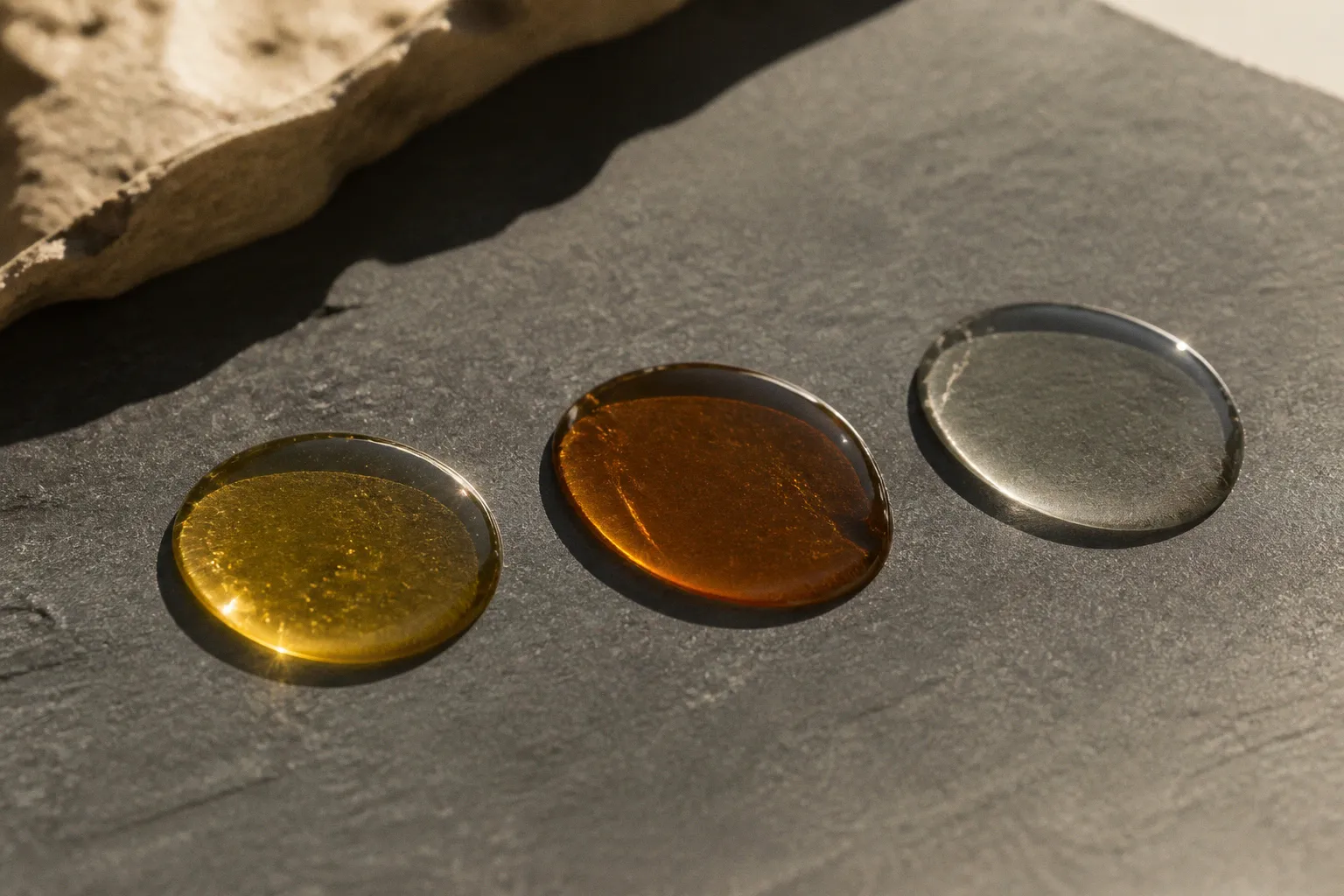
This is the central fact behind the difference between a dry body oil and a hydrating body oil.
Compare car rental deals in United Kingdom
See available offersPartner link — DiscoverCars comparisonThe choice is therefore not based on the word hydrating on the label. It depends on the oil blend, the amount of residual water on the skin, the climate, and the level of lipid replenishment required. A lightweight dry body oil can be appropriate for normal skin in a warm climate. A richer formula is more effective when the barrier is compromised, the air is dry, or the skin has visible scaling.
The most reliable application method is simple: use body oil immediately after bathing, while the skin is still damp. The oil does not create that water. It slows the evaporation of water already present on the surface.
The science of occlusion: how body oils protect the lipid barrier
The outermost layer of the skin, the stratum corneum, contains corneocytes surrounded by intercellular lipids. This structure limits transepidermal water loss, or TEWL. When the lipid organization is disrupted, water escapes more rapidly. The result is surface roughness, tightness, flaking, and increased sensitivity to environmental exposure.
Body oils address this process through two mechanisms.
- Occlusion: The oil forms a continuous or semi-continuous film that slows the movement of water from the skin into the surrounding air.
- Emollience: The oil fills microscopic irregularities between surface cells, reducing roughness and improving flexibility.
These actions are different from the function of a water-based lotion. A lotion can contain water, humectants, emollients, and occlusives in one emulsion. Humectants such as glycerin attract water. Emollients improve surface feel and flexibility. Occlusives reduce evaporation. A pure oil generally contains no water and does not provide the same humectant function.
This distinction matters when evaluating claims about a “hydrating body oil.” In practical use, the product can improve the skin’s hydration status by reducing TEWL, especially when applied over damp skin. It does not hydrate in the same way as a water-based product containing a humectant system.
A body oil is primarily a moisture-retention product. It is not a water-delivery product.
The formula’s fatty-acid profile determines much of its behavior. Oils rich in oleic acid tend to feel more substantive and spread with a slower, more lubricating slip. Oils with a higher proportion of linoleic acid can feel lighter and less persistent on the surface. Saturated fats and wax esters can produce a more protective film, although the finished texture also depends on viscosity, processing, and the rest of the blend.
There is no universal ranking of oils from “best” to “worst.” The relevant question is whether the formula supplies the level of occlusion and emollience required by the skin condition and application context.
Dry body oil vs hydrating body oil: texture and absorption
The phrase dry body oil describes a sensory and absorption profile, not the absence of oil. These products usually contain a blend selected for rapid spreading, lower surface drag, and reduced residue. Some formulas include volatile components that evaporate after application. Others rely on lightweight non-volatile emollients and lower-viscosity botanical oils.
A rich hydrating body oil usually leaves a more persistent lipid film. It may contain heavier oils, butters, or wax-like materials. That film is useful when TEWL is elevated or when the skin remains rough after lighter products. It can also feel excessive in hot weather or when applied to completely dry skin in a large quantity.
The comparison below focuses on formulation behavior rather than marketing language.
| Parameter | Dry body oil | Rich hydrating body oil |
|---|---|---|
| Primary texture | Low-residue, fast-spreading | More substantial, persistent film |
| Absorption profile | Rapid surface integration; may leave minimal residue | Slower absorption or more noticeable after-feel |
| Best application context | Warm, damp skin; daytime; warm climate | Damp skin after bathing; dry climate; evening use |
| Barrier support | Moderate, depending on the blend | Higher occlusive potential |
| Suitable skin state | Normal, mildly dry, or texture-sensitive skin that dislikes residue | Dry, flaky, rough, or barrier-stressed skin |
| Main formulation risk | Insufficient film for severe dryness | Excess residue or poor spreadability |
| Typical use error | Applying too little water beneath it and expecting hydration | Applying too much product to dry skin and creating a heavy layer |
A dry oil can be a rational choice for people who avoid body moisturizers because of residue. It spreads over a large area, dries faster, and is less likely to transfer immediately onto clothing. That convenience improves adherence. A theoretically stronger product is irrelevant if it is applied inconsistently.
The limitation is film persistence. A dry body oil may reduce TEWL effectively enough for normal or mildly dry skin, but it may not compensate for a damaged barrier. If the skin is visibly scaling, cracking, or repeatedly tight after bathing, the formula may require more occlusive materials or a lotion-oil combination.
A rich formula is not automatically more effective in every situation. Excessive occlusion can increase discomfort, particularly in humid conditions. It can also make it difficult to identify whether irritation comes from the oil blend, fragrance, botanical extracts, or simple friction from rubbing in a viscous product.
How fatty acids influence the result
Botanical oils are not interchangeable. Their fatty-acid composition influences spreadability, oxidation behavior, and the character of the surface film.
- Oleic-acid-rich oils tend to provide a more lubricating, substantive feel. They can be useful in rich body oil blends, especially for rough body skin.
- Linoleic-acid-rich oils often produce a lighter finish and may be preferred in formulas designed for rapid absorption.
- Wax esters, such as those dominant in jojoba, behave differently from triglyceride oils. Their structure contributes to a smooth, stable, non-water-based emollient film.
- Butters and high-viscosity oils increase persistence and can improve protection against environmental dryness, but they also increase drag and residue.
The ingredient list gives a better indication than the front-label category. A product marketed as a dry oil may still contain a meaningful proportion of richer botanical oils. A product called a body serum may be mostly lightweight emollients with a small amount of plant oil. The name is not a standardized dermatological classification.
The jojoba advantage: why liquid wax behaves differently
Jojoba is frequently grouped with botanical oils, but its chemistry is distinct. It is a liquid wax composed of approximately 98% wax esters rather than a conventional triglyceride oil. This structure gives jojoba a different oxidation profile, slip, and after-feel.
Wax esters are built from a fatty acid and a fatty alcohol. Human sebum also contains wax esters, although jojoba is not identical to sebum and should not be described as a biological replacement for it. The similarity helps explain why jojoba can feel well integrated on the skin without the same level of heaviness associated with some richer oils.
Jojoba is useful in body formulations for several reasons:
1. Surface smoothing: Its emollient film reduces the feel of rough corneocyte edges and improves glide.
2. Moderate occlusion: It slows moisture loss without necessarily producing the dense film of a butter-heavy product.
3. Formula compatibility: It can support both lightweight and richer blends.
4. Elasticity support through conditioning: By reducing surface dryness and improving flexibility, it can make skin feel more supple. This is not the same as demonstrating a defined percentage improvement in dermal elasticity.
5. Oxidative stability: Compared with many triglyceride-rich plant oils, jojoba is relatively resistant to oxidation. Finished-product stability still depends on packaging, storage, and the complete formula.
Jojoba contains vitamin E, and the supplied research identifies approximately 79% of its vitamin content as vitamin E. That figure should not be converted into a claim that jojoba is a treatment for skin aging or loss of elasticity. The more defensible interpretation is narrower: jojoba contributes a stable emollient phase and supports surface conditioning.
Jojoba is not a true triglyceride oil. Its 98% wax-ester composition is the reason it behaves differently on the skin.
For normal to mildly dry body skin, jojoba can function as the main emollient in a dry body oil or as a balancing component in a richer blend. It is not necessarily sufficient on its own for severe dryness. A formula’s performance depends on the total lipid system, not on a single recognizable ingredient.
Jojoba, coconut oil, and richer plant oils
Coconut oil is a different material again. It contains a high proportion of saturated fatty acids and produces a more persistent, substantive film than many lightweight oils. It can be useful in body products intended for rough or dry skin, but its texture may be less suitable for daytime use or for people who dislike a residual coating.
The comedogenic scale is sometimes used to assess oils, but it has limited predictive value for body care. Ratings can vary by test method, concentration, vehicle, and anatomical site. Facial acne-prone skin is not equivalent to the forearms, legs, or torso. A body oil can still cause follicular congestion in susceptible users, especially when applied heavily over areas affected by acne, folliculitis, or occlusion from tight clothing.
The practical approach is to use the formulation context:
- Apply richer oils to dry limbs, elbows, knees, and other areas with persistent roughness.
- Use lighter blends on the chest, back, or areas prone to sweat and follicular congestion.
- Avoid treating a comedogenicity rating as a definitive prediction of individual response.
- Patch-test fragranced or highly botanical formulas when the skin is reactive.
Post-shower oil application: the variable that changes performance
Post-shower oil application is not a cosmetic ritual added after the science. It is the main factor that determines whether an oil merely lubricates the surface or meaningfully limits water loss.
Warm water increases surface hydration temporarily. The longer the skin remains exposed after bathing, the more of that water evaporates. Applying oil while the skin is still damp places the occlusive layer over available surface moisture. The oil then slows its escape.
The sequence is more important than the quantity.
1. Keep the shower moderate. Very hot water and prolonged cleansing can increase dryness by disrupting surface lipids and removing some of the skin’s natural protective material.
2. Use a non-stripping cleanser where needed. Full-body cleansing with a strong detergent at every shower is not required for every area.
3. Pat rather than fully dry. The skin should be damp, not dripping.
4. Apply a small amount of oil in sections. This improves distribution and reduces the tendency to over-apply.
5. Press and spread with low friction. Aggressive rubbing adds mechanical stress without improving occlusion.
6. Allow the film to settle before dressing. This reduces transfer to fabric and helps the product remain on the skin.
Oil quantity should be adjusted by area. Legs and arms can tolerate more product than the upper chest or back. A rich formula may need only a thin film. More product does not create proportionally more benefit. It mainly increases residue.
For very dry skin, an oil may work better as the final layer over a water-based lotion. The lotion supplies water and, if formulated appropriately, humectants and additional emollients. The oil then reduces evaporation. This is a more complete barrier-support strategy than replacing the lotion with oil alone.
When to choose lotion plus oil
The oil-over-lotion method is most rational when the skin shows a combination of low surface hydration and lipid deficiency. Typical indicators include:
- Roughness that returns shortly after oil application.
- Scaling that persists despite a consistent body oil routine.
- Tightness after bathing.
- Visible ashiness in low-humidity conditions.
- Areas that become irritated by friction or frequent washing.
The lotion does not need to be applied in a thick layer. A moderate amount followed by a thin oil film is usually more efficient than saturating the skin with either product separately.
For mildly dry skin, damp skin plus oil may be sufficient. For normal skin, a dry body oil can be selected primarily for its spreadability and finish. For persistent barrier symptoms, the formula should be assessed as part of a broader routine rather than judged by the oil category alone.
Botanical body oil benefits depend on the whole blend
“Botanical” identifies the source of the ingredients. It does not define the performance of the finished product. A botanical body oil can contain a useful combination of triglyceride oils, wax esters, extracts, aromatic materials, and antioxidants. It can also contain a narrow oil blend with a high fragrance load and limited barrier value.
The most relevant formulation questions concern function.
What is the oil base?
The first ingredients usually determine the dominant feel and film. A product led by jojoba, sunflower, squalane, or other lighter emollients will behave differently from one led by coconut oil, olive oil, castor oil, or a butter-derived material.
This is not a ranking. Each material has a place. The issue is whether the base matches the intended use.
Is the formula anhydrous?
A pure oil product is anhydrous, meaning it contains no water. It does not require the same preservative system as a water-containing lotion, but it is still vulnerable to oxidation and contamination from wet hands, bathroom humidity, and unsuitable packaging.
If a product contains water, aloe juice, hydrosols, or other aqueous ingredients, preservation becomes a central formulation requirement. Adding water to a pure shea butter or oil base without a validated preservative system creates a microbial risk. This is a formulation error, not a minor technical detail.
Does it contain fragrance or essential oils?
Fragrance does not determine whether an oil is dry or rich. It does affect tolerance. Essential oils and fragrance components can cause irritation or sensitization, particularly when applied over freshly shaved, exfoliated, or already compromised skin.
A fragrance-free botanical body oil is not automatically safer for every user, but it reduces one common source of reaction. The absence of fragrance also makes it easier to identify whether the base formula itself is causing a problem.
How is it packaged?
An oil in a narrow-neck bottle, pump, or air-restrictive dispenser is easier to dose and less exposed to repeated contact than an open jar. Clear packaging can increase light exposure, depending on the product’s stability system. Oxidized oils may develop an altered odor and can become less suitable for use.
Packaging is part of formula performance. A well-designed blend stored poorly can deteriorate before its stated period after opening.
Body serum vs body oil: similar category, different construction
The distinction between a body serum and a body oil is not standardized across the market. In most cases, body serum signals a lighter texture, a more complex active-ingredient story, or a hybrid formula. It may be an anhydrous blend of lightweight emollients. It may also be a water-based or emulsion-like product containing humectants, niacinamide, exfoliating acids, or other functional ingredients.
A body oil is more narrowly expected to be oil-dominant. A body serum can be oil-based, water-based, or mixed. The ingredient list is the reliable reference.
| Product type | Common base | Main function | What to expect |
|---|---|---|---|
| Pure body oil | Botanical oils, wax esters, or other anhydrous emollients | Reduce TEWL and soften the surface | No direct water phase; best applied over damp skin |
| Dry body oil | Lightweight oils and emollients; sometimes volatile components | Provide a low-residue lipid film | Fast spread and limited after-feel |
| Rich body oil | Higher-viscosity oils, butters, or persistent emollients | Increase occlusion and surface conditioning | More residue; useful for rough or dry areas |
| Water-based body serum | Water, humectants, and treatment ingredients | Increase surface water content and deliver soluble actives | Usually needs an emulsion or separate occlusive layer |
| Oil-based body serum | Lightweight emollients plus selected botanical oils or actives | Combine rapid spread with targeted conditioning | Category name alone does not establish performance |
A body serum may be the better choice when the goal includes more than barrier support. For example, a water-based product can deliver humectants that a pure oil cannot. An oil-based serum may simply be a dry body oil with a more treatment-oriented label.
The correct comparison is not “serum versus oil” in the abstract. It is:
- Does the formula contain water?
- Does it contain humectants?
- Which emollients dominate?
- Is the product designed to be layered?
- Does the formula contain fragrance or exfoliating actives?
- Is the intended result surface softness, reduced TEWL, or treatment of a specific skin concern?
Choosing the best body oil for dry skin glow
A body glow oil usually creates a visible sheen through surface reflection. That effect is not the same as improved skin hydration. A smoother, more evenly coated surface reflects light more consistently, which can make the skin appear brighter. The appearance may be immediate. Barrier improvement is a separate process.
For dry skin, the selection should begin with the severity and location of dryness.
For normal skin
Choose a dry body oil or a lightweight botanical body oil. Jojoba-based formulas are often suitable because their wax-ester structure provides slip and surface conditioning without requiring a heavy film. Apply to damp skin after bathing.
For mildly dry skin
Use a blend with a moderate occlusive phase. Jojoba can be combined with richer plant oils or other emollients. The product should spread without requiring repeated friction. If the skin feels tight again within a short period, add a lotion beneath it rather than simply increasing the oil quantity.
For rough or flaky skin
A rich hydrating body oil is more appropriate, especially on the legs, elbows, knees, and hands. The best result usually comes from applying a water-based moisturizer first and sealing it with oil. Flaking caused by a disrupted barrier is not reliably corrected by an oil-only routine.
For humid climates
A dry oil is usually easier to tolerate. High humidity reduces the need for a dense occlusive film in many users, although individual skin condition still matters. Heavy formulas may feel persistent and can interact poorly with sweat and tight clothing.
For dry or cold climates
A richer oil or lotion-plus-oil system has a stronger rationale. Low ambient humidity increases the gradient that drives water loss from the skin. The product should be applied promptly after bathing and reapplied to persistently dry areas as needed.
For sensitive or reactive skin
A short ingredient list is easier to assess. Fragrance and essential oils should be treated as potential irritants, not as proof of botanical quality. Patch-testing a small area before broad application is a practical screening step.
Common formulation and application errors
The same mistakes appear repeatedly in body oil routines. They are easy to correct.
1. Applying oil to completely dry skin and expecting it to supply water.
The oil can soften the surface and reduce later water loss, but it cannot replace a water phase that is not present.
2. Using a rich oil in excessive quantity.
A thick layer does not guarantee better barrier support. It increases residue, transfer, and the chance of discomfort.
3. Choosing by the word “natural” alone.
Botanical origin does not predict fatty-acid profile, oxidation stability, fragrance load, or suitability for reactive skin.
4. Treating the comedogenic scale as universal.
The same ingredient can behave differently depending on concentration, vehicle, body area, and individual response.
5. Confusing glow with hydration.
Shine is an optical effect. Improved barrier function requires reduced TEWL and consistent care.
6. Ignoring packaging and storage.
Heat, light, water exposure, and repeated hand contact can shorten the useful life of an anhydrous formula.
7. Using fragranced oil on compromised skin.
Fresh shaving, exfoliation, dermatitis, and cracking increase the likelihood of stinging or irritation.
8. Expecting a single oil to solve every form of dryness.
Barrier disruption may require a moisturizer, reduced cleanser exposure, and evaluation of the underlying cause.
The practical route through the categories
For readers comparing dry body oil vs hydrating body oil, the decision can be reduced to formulation behavior rather than label language.
Choose a dry body oil when rapid spreading, minimal residue, and daytime use are the priorities. It is generally suited to normal or mildly dry skin, warm weather, and users who will apply the product consistently only if it settles quickly.
Choose a rich hydrating body oil when the skin needs a persistent lipid film. It is more appropriate for rough limbs, dry climates, evening application, and areas that remain uncomfortable after lighter products.
Choose an oil-based body serum when the formula offers a deliberately lightweight emollient system and the product is intended to function as a concentrated treatment layer. Verify the ingredients. “Serum” is not a regulated guarantee of water content or active performance.
Choose a water-based body serum or lotion beneath oil when the skin needs both water and lipid support. This is the more complete route for persistent dryness because it combines humectancy, emollience, and occlusion.
Final do-and-don’t check
Do:
- Apply body oil to warm, damp skin after bathing.
- Match viscosity and film persistence to climate and skin condition.
- Use jojoba with accurate expectations: it is a 98% wax-ester liquid wax, not a triglyceride oil.
- Layer oil over lotion when dryness persists.
- Read the full ingredient list instead of relying on “dry,” “serum,” or “botanical” on the front label.
- Reduce fragrance exposure when the skin is reactive.
- Store anhydrous oils away from heat, light, and water contamination.
Don’t:
- Don’t claim that pure oil adds water to dry skin.
- Don’t assume the richest formula is automatically the best formula.
- Don’t use a comedogenicity score as a definitive personal prediction.
- Don’t add water to a pure oil or shea butter base without a validated preservation system.
- Don’t interpret immediate shine as proof of improved skin elasticity or long-term hydration.
- Don’t apply heavy oil blindly to areas affected by follicular congestion.
- Don’t continue using a product after a clear change in odor, color, or skin response.
The best body oil is the one whose lipid profile, residue level, and application method match the skin’s actual need. Dry oils optimize adherence and surface finish. Rich oils provide a more persistent barrier film. Neither category replaces the other, and neither supplies water on its own. For measurable improvement in dry body skin, the decisive variables are damp-skin application, appropriate occlusion, and a formula that the user can apply consistently.