Body glow oil prep: what to gather and check before use
A shimmer oil that streaks across patchy, flaking skin doesn't glow. It exposes every dead cell you failed to slough off and every dry patch you ignored.
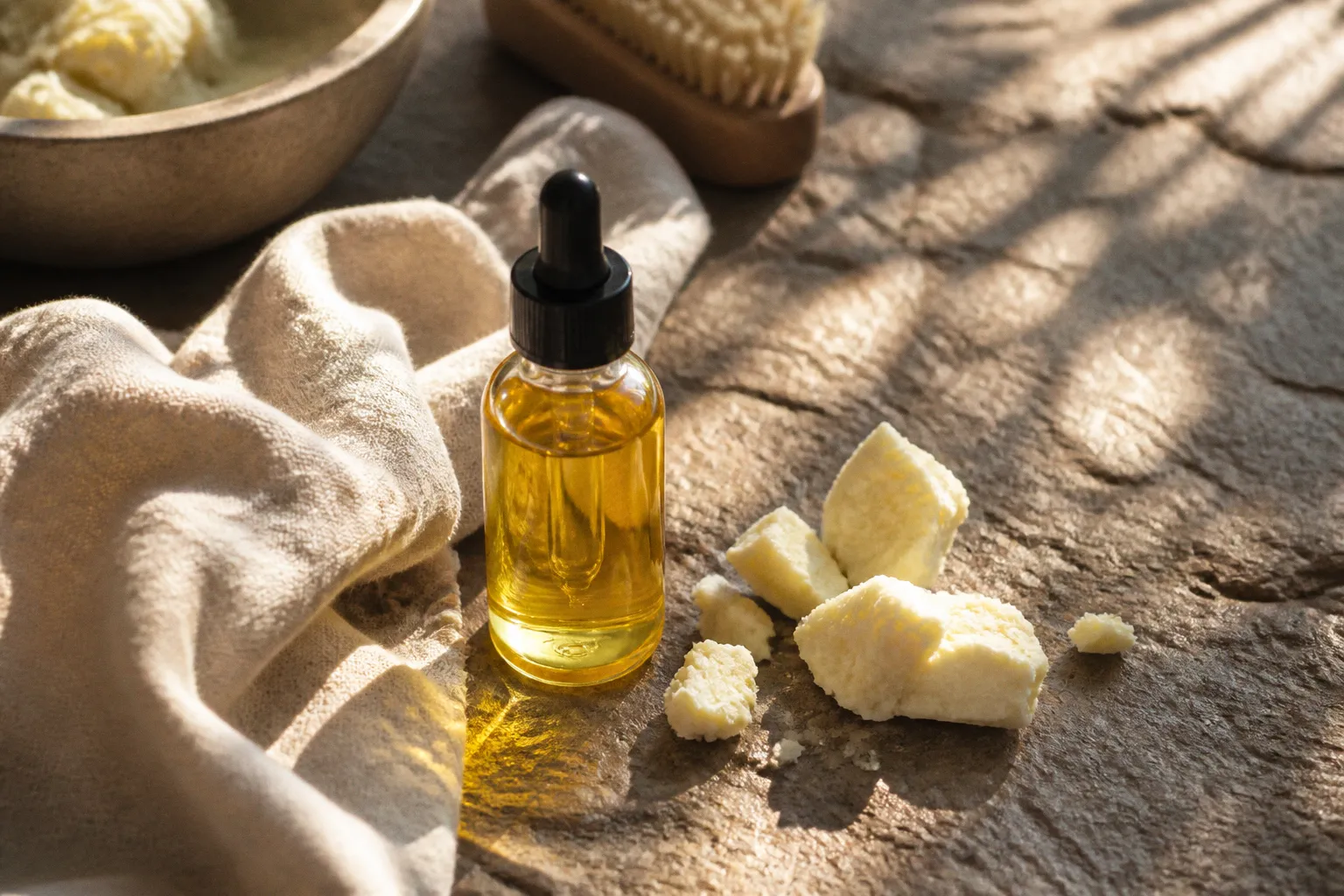
Your Skin Is a Surface, Not a Spa Treatment: The Body Glow Oil Prep Protocol
Most people grab a bottle of body glow oil, slather it on dry legs, and wonder why their clothes look like a crime scene by noon. The prep work matters more than the product. You're dealing with a mechanical problem: an uneven surface rejects an even finish. Fix the surface first, and the oil does what it's supposed to do. Skip the prep, and you're wasting money on a product that's now sitting on top of dead skin cells and lint.
This is the prep checklist that separates a clean, locked-in glow from a streaky mess that transfers onto your favorite shirt. Run through every step before you touch the bottle. It's not optional, and it's not negotiable.
Surface Preparation: Slough Before You Slather
Dead skin cells are friction's worst enemy. When you skip exfoliation, you're painting over gravel and hoping it looks smooth. Body glow oil clings to rough patches unevenly, pools in dry cracks, and skips the hydrated zones entirely. The result: a blotchy, inconsistent sheen that screams "I tried" rather than "I planned."
Grab a physical or chemical exfoliant and work it across your target zones before you even think about turning on the shower. Focus on the high-friction areas first — elbows, knees, heels, the back of the upper arms where keratin builds up. These are the spots that will sabotage your finish if you leave them loaded with dead cell debris. A standard loofah, a salt or sugar scrub, or a gentle AHA-based body wash will handle the job. What matters is that you commit to the friction and clear the surface.
A clean, exfoliated surface is the only surface that absorbs oil evenly. Skip this step and the oil sits on top of dead skin like paint on rust.
After you've worked the exfoliant through, rinse thoroughly. Residual scrub particles left behind will interfere with oil absorption and create drag during application. You want skin that feels smooth to the touch, not skin that feels squeaky-stripped. There's a difference between clean and stripped — don't confuse aggression with effectiveness.
One caution: do not exfoliate over freshly shaved or freshly waxed skin. You've already created micro-trauma. Adding chemical exfoliants or aggressive physical scrubbing on top of that opens the door to irritation and stinging once the oil goes on. Give the skin at least 24 hours after hair removal before you run through this prep protocol.
The 80% Damp Rule: Why Timing the Towel-Off Matters
Bone-dry skin is the enemy of absorption. Apply body glow oil to skin that's completely dry and you're forcing the oil to do double duty — both hydrate and absorb into a surface that's already lost its moisture. That's a losing fight. The oil will sit on the surface longer, set unevenly, and leave you with that greasy-but-flaky texture nobody wants.
Step out of the shower, towel off, and stop while your skin is still slightly damp — about 80% dry. Not dripping. Not bone-dry. Damp enough that you can feel residual moisture across the surface, dry enough that you can get dressed without soaking through your clothes in ten minutes. This moisture window is what locks the oil into the skin barrier rather than letting it evaporate off the surface.
The science behind it is mechanical, not mystical: water on the surface of the skin creates a carrier medium. The oil binds to that water layer and gets pulled into the stratum corneum as the moisture evaporates. You trap the hydration underneath the oil film instead of losing it to the air. Apply oil to dry skin and you get a topical coat that sits on top. Apply oil to damp skin and you get integration.
Practical timing depends on your shower temperature, bathroom humidity, and how aggressively you towel off. Most people hit the 80% mark somewhere between three and seven minutes post-shower. Test it: press the back of your hand to your thigh. If you leave a slight moisture trace but no visible wet spot, you're in the zone. If the towel comes away wet when you blot, you're still too damp and the oil will bead up rather than absorb.
Patch Testing: Don't Skip This Even If You're Impatient
Concentrated botanical oils and shimmer pigments can trigger reactions you won't see coming. Jojoba, coconut, rose, and various fragrance compounds are common culprits. Even if you've used body lotions with similar ingredients for years, a body glow oil is a more concentrated delivery system and behaves differently on the skin.
Run a patch test on a small, inconspicuous area — the inner forearm or behind the ear works — and wait before committing to full-body application. How long to wait depends on your skin's reactivity, but give it enough time to catch a delayed reaction. If the test site stays clear with no redness, itching, or raised bumps, you're clear to proceed. If anything shows up, you've just saved yourself a full-body breakout.
This step takes minutes. Skipping it can cost you days. The math is simple.
Warming the Oil: Five Seconds of Friction Work
Cold oil out of the bottle does not spread well. It sits in thick ribbons, resists even distribution, and forces you to use more product than necessary to cover the same surface area. You're not saving oil by skipping the warming step — you're wasting it.
Pump or pour 5–10 mL of body glow oil into the palm of one hand. That's roughly a teaspoon to a tablespoon depending on how much skin you're covering. Rub your palms together with intent for about five seconds. The friction generates heat, thins the viscosity of the oil, and primes it to spread across larger surface areas like legs, arms, and torso without dragging or skipping.
Five seconds. That's the number. Not three, not ten. Five seconds of vigorous palm-to-palm friction delivers enough thermal activation to drop the oil into a workable consistency without degrading the volatile compounds in the formula. You should feel the oil shift from a slick, cool pool into a warm, fluid layer across both palms. That's your cue to move.
If you're working a shimmer oil specifically, this warming step also helps distribute the mica or light-reflecting particles more evenly. Cold application tends to drop shimmer in concentrated streaks; warm application suspends it across the film.
Tool Selection: Stippling Brush Beats Bare Hands
Bare palms absorb product. That's not a theory — it's friction physics. Every time you press oil-coated palms against your skin, the palmar surface soaks up a percentage of the formula before it ever reaches your legs. You're literally transferring product from the bottle to the trash via your hands.
A large stippling brush solves this. The bristles distribute shimmer oil across the surface evenly, hold the product in the brush head rather than absorbing it, and create a stippled application pattern that prevents streaking. This is especially critical for body glow oils that contain mica, light-reflecting pigments, or pearl particles — the very ingredients that make these products worth using in the first place.
Here's a quick comparison to make the tool decision clear:
| Parameter | Bare Palms | Stippling Brush |
|---|---|---|
| Product absorption into hands | High — you lose formula to skin | Minimal — bristles hold and release |
| Shimmer distribution | Concentrated streaks | Even, suspended particles |
| Streak risk | High on large flat areas | Low due to stippling motion |
| Coverage efficiency | Requires more product per area | Less product needed per area |
| Hygiene | Transfers existing skin oils back | Cleaner separation of product and skin |
Dab the brush into the warmed oil on your palm, then stipple it across the skin in short, pressing motions rather than long sweeping strokes. The dabbing action presses the oil into the surface without dragging shimmer into concentration lines. Work in sections: one thigh, then the other. One arm, then the other. Don't try to coat the entire body from the same brush load.
If you don't have a stippling brush, a soft, densely-packed kabuki brush works as a backup. The key is dense bristles that release product on contact rather than absorbing it. Avoid fluffy, loose-weave powder brushes — they'll drink the oil before it reaches your skin.
Setting Time: Give It a Minute Before You Dress
Body glow oil that hasn't set will transfer. This is not a suggestion — it's a guarantee. The moment you pull a pair of jeans over freshly oiled legs, you're painting the inside of your pants with whatever shimmer and pigment you just applied. By mid-afternoon you'll have oil-stained denim and a fading finish.
Allow one to five minutes of set time before getting dressed. The exact window depends on the formula — dry oils and gel-oils set faster than heavy botanical blends — but the lower end of that range is a safe starting point. You want the oil to transition from a wet film to a dry-touch surface. Test it: press the back of a clean finger to a treated area. If it comes away with visible oil residue, you're not ready. If it comes away clean or with only a faint trace, you can dress.
For heavier carrier-oil-based formulas, lean toward the longer end of that window. Five minutes can mean the difference between a finish that lasts all day and a finish that ends up on your clothes by noon.
One to five minutes of set time is the difference between a glow that stays on your skin and a stain that ends up on your shirt.
Final Checks Before You Commit
Before you step out the door, run through this last-pass checklist:
- Skin feels smooth, not tacky. The oil should have absorbed into the surface. If your hand comes away sticky, you either applied too much or didn't wait long enough.
- No visible pooling. Check the backs of knees, inner elbows, and ankles. These areas collect excess product and stay wet longest. Blot them lightly with a tissue if needed.
- Shimmer distribution is even. Look at the surface under direct light. Streaks and concentration lines mean you need to stipple those areas again with a clean brush load.
- Clothing choice matches the finish. Light-colored fabrics show transfer more than dark ones. If you're wearing white linen, give yourself the full five minutes and consider a lighter formula. Heavy oils and light fabrics are not friends.
The Bottom Line
Body glow oil prep is mechanical, not mystical. Exfoliate the dead skin. Towel to 80% dry. Patch test if you're new to the formula. Warm the oil in your palms for five seconds. Apply with a stippling brush, not bare hands. Wait one to five minutes before dressing. Every step in that sequence exists to solve a specific failure point that people hit when they skip the prep and wonder why the product doesn't perform.
The oil is the easy part. The prep is where the finish gets built. Run through this checklist every single time and the streaks, stains, and uneven patches stop being a problem. The product works when the surface is ready for it.