Testing 15 Body Lotions: Which Formulas Actually Hydrate Your Skin?
The Guardian's recent panel test rotated five testers — ages spanning their twenties to their sixties — through fifteen drugstore and direct-to-consumer body lotions over three weeks.
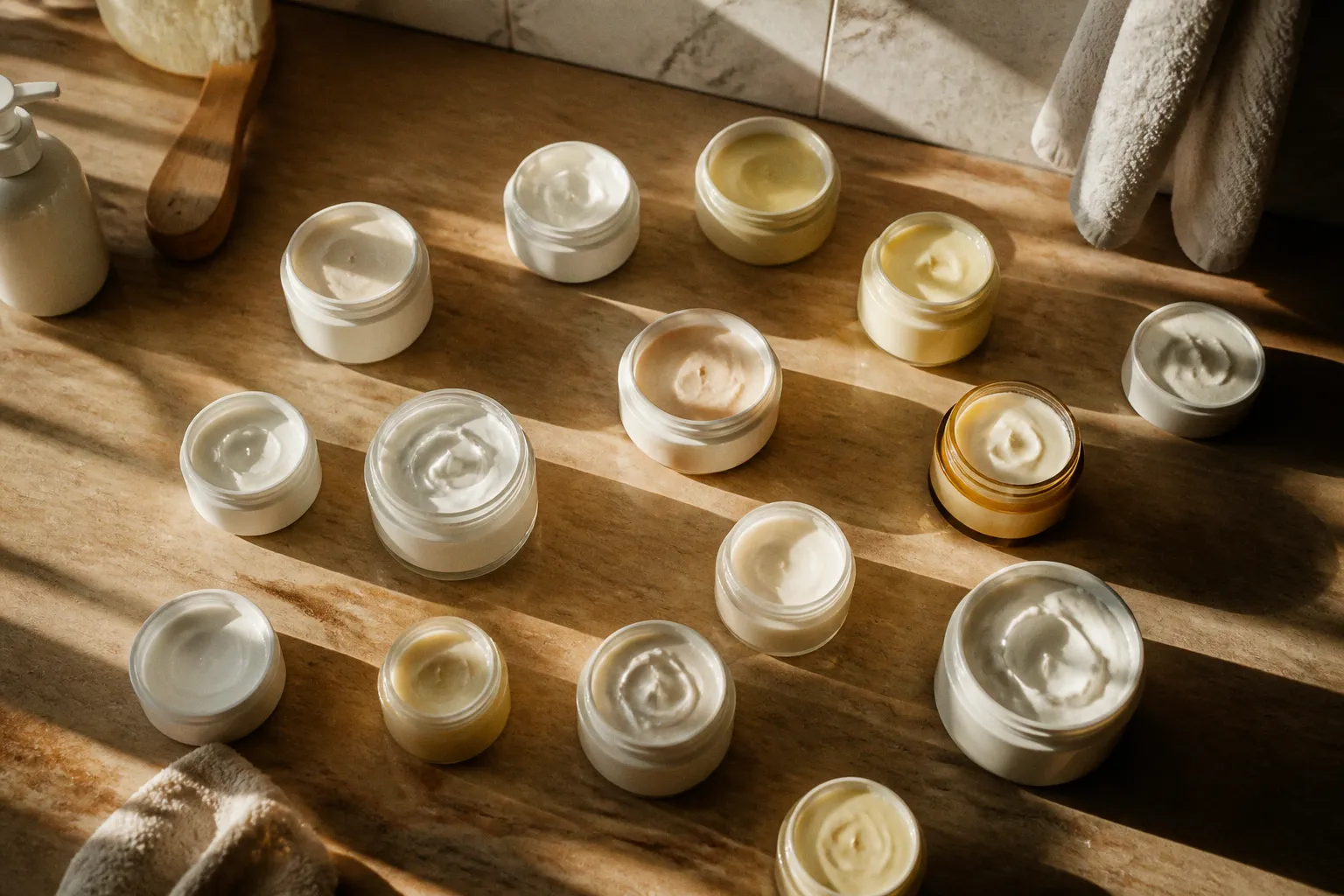
Fifteen Lotions, Five Testers, Three Weeks of Data
Three board-certified dermatologists were consulted as formulation and skin-physiology references. The exercise generated a rare kind of data: a multi-user sensory and efficacy map that goes beyond marketing copy.
Formulation factors behind the winners
A lotion is, at its core, an oil-in-water emulsion. Efficacy depends on the occlusive-to-humectant ratio, the molecular weight of the humectant fraction, and the stability of the emulsion under shear and temperature stress. When five testers apply at least one product daily for three weeks, three variables become legible: residual occlusion after absorption, perceived slip (a proxy for fatty acid chain length), and fragrance load tolerance over repeated use.
The panel evaluated packaging ergonomics, moisturization duration, texture, scent, absorption, effects on existing skin conditions, and overall value. All products were manufacturer-supplied samples, earmarked for donation post-trial — a detail that strips purchase bias from the results.
The standout formula: Nivea. Shea butter functions as the dominant occlusive — a triglyceride blend rich in oleic, stearic, and palmitic acids. Hyaluronic acid serves as the humectant counterweight, drawing water into the stratum corneum and reducing transepidermal water loss (TEWL). Testers reportedly registered sustained moisturization for twelve hours or longer, which aligns with what this combination predicts: occlusive sealing of a humectant-saturated surface. The brand's 48-hour hydration claim outpaces observed wear time, but the delta is narrower here than in most mass-market emulsions. One tester described the product as "the Goat" in its price bracket — a phrase that, translated into formulation language, means the occlusive-humectant ratio was well-calibrated for daily wear without greasy residue.
The failure modes the data exposed
Two recurring complaints surfaced. First, fragrance concentration: testers flagged a floral-forward profile as "just too strong" for daily wear. High fragrance load is a known irritant vector, particularly for individuals with a compromised barrier or atopic history. Second, packaging ergonomics — one tester noted the bottle as "kind of poorly constructed," which introduces oxidation risk if the seal fails between uses.
These failure modes are precisely what bench chemistry cannot predict. Subjective tolerance to volatile fragrance compounds and mechanical design of the primary container both require field testing rather than in-vitro screening.
Lab-style checks before you commit
- Do read the ingredient deck for the occlusive-humectant pair. Shea butter plus hyaluronic acid is a validated combination; glycerin plus dimethicone is another. Don't expect a product containing only fragrance and water to perform beyond a single application.
- Do run a smell-through-the-cap test. Don't purchase anything where the scent is detectable without opening — concentration likely exceeds 0.5%, borderline for sensitive or reactive skin.
- Do inspect the closure mechanism. Don't trust flip caps and pump heads over screw tops. A compromised closure accelerates oxidation of unsaturated fatty acids in the oil phase, shortening shelf life by weeks.
- Do patch test for 72 hours on the inner forearm before full-body daily use. Don't assume a panel-tested formula will behave identically on your specific barrier — delayed hypersensitivity can surface beyond the three-week screening window.
The Guardian's data confirms what formulation chemistry has long predicted: the most effective mass-market lotions pair a known occlusive with a well-characterized humectant, in a stable emulsion, at a fragrance concentration that respects barrier integrity. Marketing copy is secondary to this structural reality.