Why Your Moisturizer Isn't Fixing Dry Skin and How to Correct It
Per a recent Glamour report synthesizing guidance from dermatologists Jessica Wu, MD, and Michelle Henry, MD, persistent post-moisturizer dryness usually traces to one of three measurable problems: a…
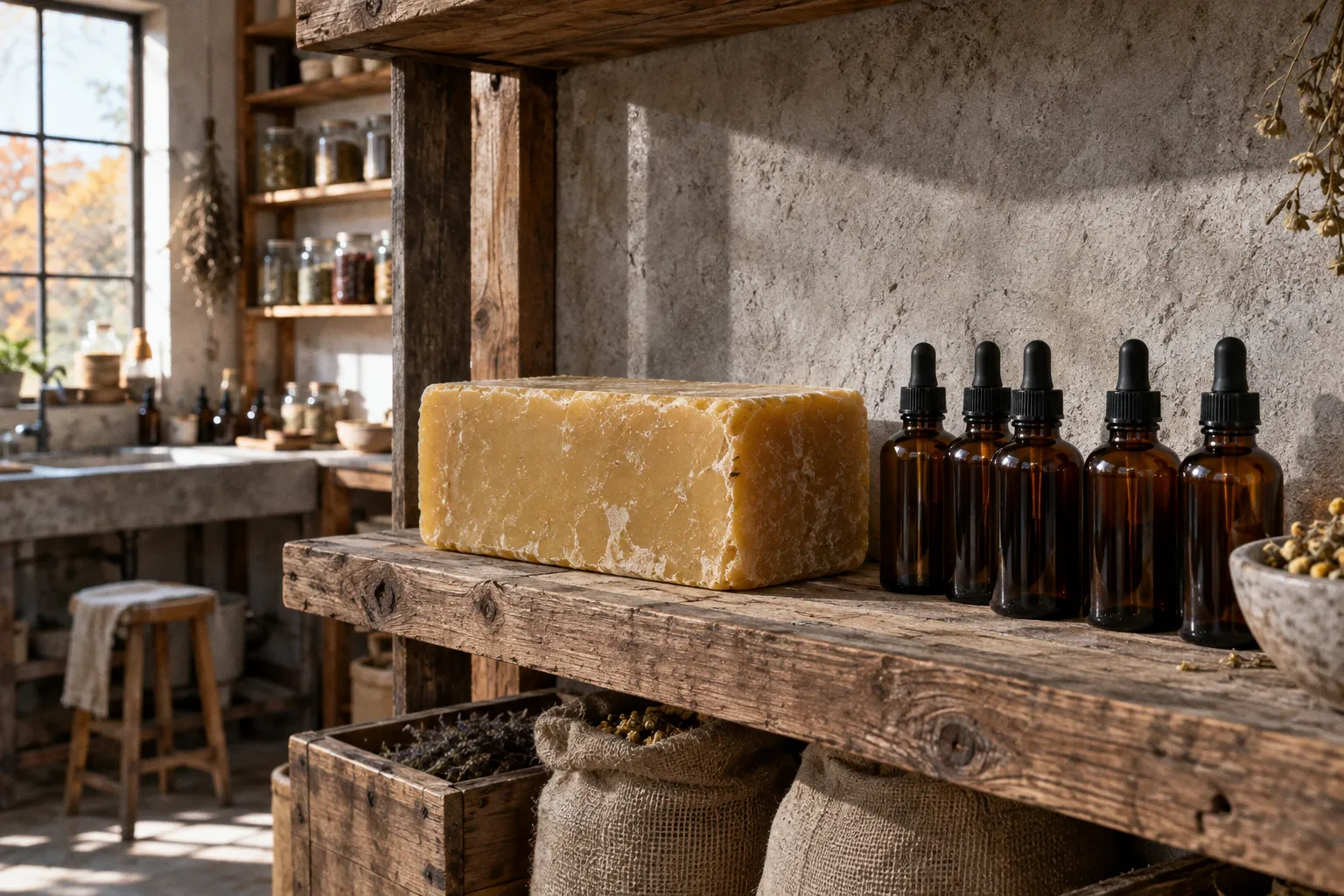
Per a recent Glamour report synthesizing guidance from dermatologists Jessica Wu, MD, and Michelle Henry, MD, persistent post-moisturizer dryness usually traces to one of three measurable problems: a lipid-light formula, a compromised barrier, or application timing that does not match the skin's water-loss curve. For body butter and botanical oil users, the distinction matters because the corrective protocol differs in each case.
The Formula Problem
Wu, as reported by Glamour, identifies the lightest cause first: a vehicle too thin to replace what the stratum corneum is losing. A hyaluronic acid serum pulls water to the surface but cannot seal it; lipid-deficient skin needs an occlusive layer over its humectants. The formulation checklist: pair a humectant (glycerin, hyaluronic acid, panthenol) with an emollient rich in fatty acids or ceramides—unrefined shea butter, squalane, ceramide complexes, or a high-oleic plant oil—then finish with a true occlusive (petroleum jelly, lanolin, or a beeswax-heavy balm). Wu also notes that for chronically dry bodies, a balm or cream in a jar typically outperforms a pump lotion, since the lower water phase translates to a higher lipid-to-water ratio per application.
The Barrier Problem
Both dermatologists, per Glamour, flag over-cleansing and over-exfoliation as the leading causes of barrier breakdown that no topical can fully compensate for. High-pH foaming surfactants, daily acid toners, peel pads, and nightly retinoids applied to body skin all elevate transepidermal water loss by stripping intercellular lipids. Wu emphasizes that visible flakes typically indicate an injured barrier, not residual keratin that needs further removal—the corrective response is to reduce surfactant load, pause the actives, and allow ceramide synthesis to recover. Henry adds that hot, prolonged showers accelerate lipid stripping; the protocol is a lukewarm rinse, gentle pat-drying, and moisturizer applied within three minutes to slightly damp skin to lock in the residual water phase.
Practical Protocol
For readers working with body butters and carrier oils, the lab-style routine is straightforward. Apply a humectant-rich essence or water-based serum to damp skin immediately post-cleansing, then seal with a lipid-dense body butter within three to five minutes. Reapply mid-day if tightness returns within ten minutes of the first application—that window is the diagnostic threshold both dermatologists cite for under-dosing. Replace foaming body washes with non-ionic syndet bars or oil-based cleansers; cap mechanical exfoliation at once weekly; reserve retinoids and acid treatments for areas that tolerate them. If dryness persists after two weeks of disciplined lipid replacement and reduced surfactant exposure, the variable is likely genetic sebum output, which Henry notes is largely fixed—meaning the routine, not the product, becomes the long-term lever.