Essential Skincare Strategies for Deep Hydration and Texture Refinement in Your 60s
Yahoo Life UK recently published a routine framework for readers in their sixties, centering on three measurable skin outcomes: transepidermal water loss reduction (deep hydration), pigment…
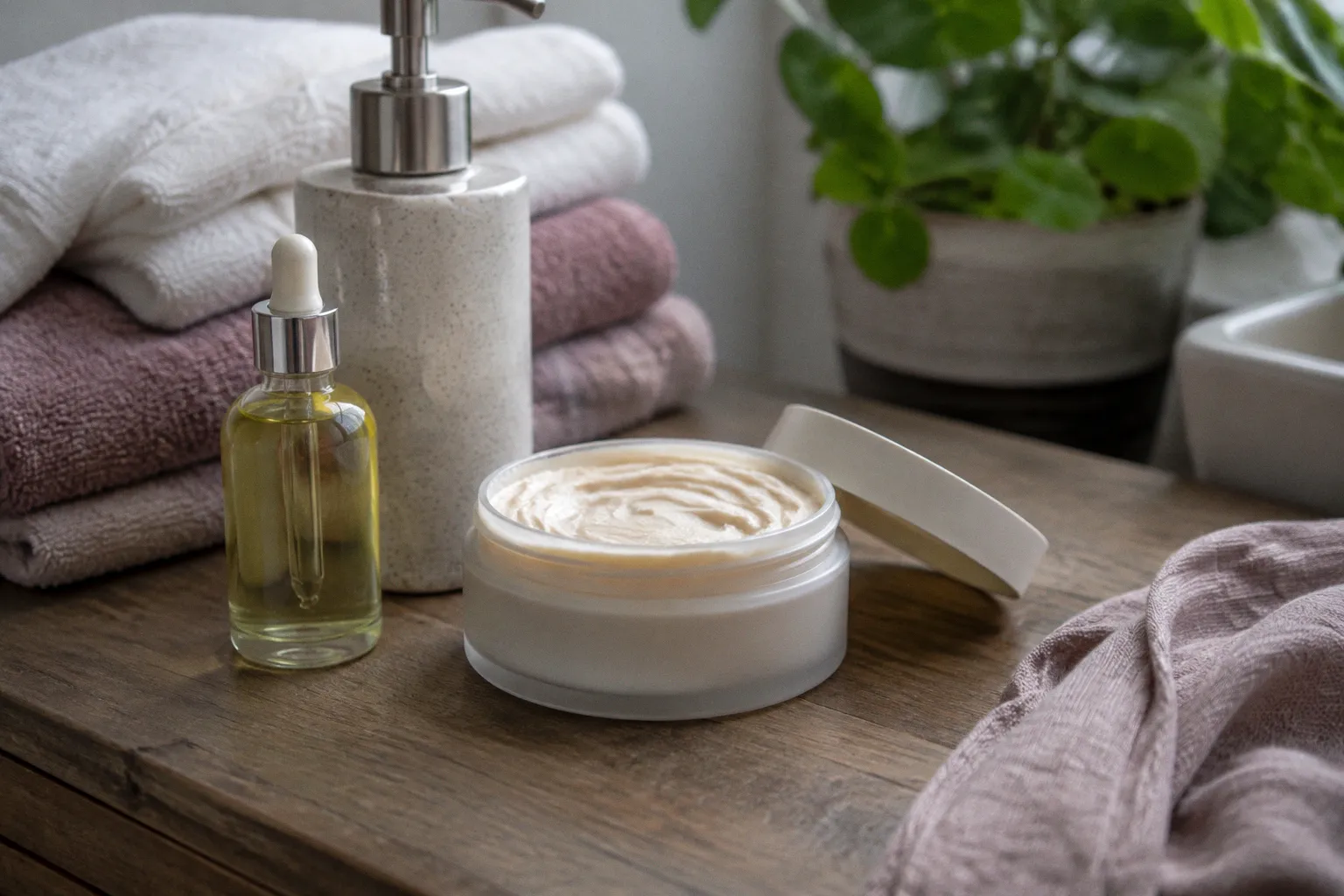
Ceramides, panthenol, hyaluronic acid, squalane, and PDRN now appear in virtually every barrier-focused moisturizer competing for shelf space. Yahoo Life UK recently published a routine framework for readers in their sixties, centering on three measurable skin outcomes: transepidermal water loss reduction (deep hydration), pigment uniformity (even tone), and stratum corneum smoothing (texture). Meanwhile, the current retail cycle—driven by end-of-season sales—has made barrier-repair and multi-weight hyaluronic acid formulations unusually accessible at the sub-$50 tier. For a demographic where the acid mantle thins and intercellular lipid production drops sharply, the ingredient profile matters more than the price tag.
Why Ceramides and Multi-Weight Hyaluronic Acid Dominate This Category
The E! News deals roundup names several formulations built on a five-ceramide complex paired with panthenol (provitamin B₅). In cosmetic chemistry terms, ceramides 1, 3, and 6-II are the dominant intercellular lipids in human skin; a product stacking five types is attempting to mimic the full lamellar lipid matrix rather than patching a single gap. Panthenol functions as a humectant that converts to pantothenic acid in the stratum corneum, supporting coenzyme A activity and wound-healing pathways—a measurable benefit for thinned, post-menopausal skin.
Hyaluronic acid appears across multiple molecular weights in several cited products. This is a deliberate formulation strategy: high-molecular-weight HA (>1,000 kDa) sits on the skin surface, forming a water-holding film that reduces TEWL; low-molecular-weight HA (<50 kDa) penetrates into the upper epidermis, where it can attract water at the cellular level. For a reader in her sixties experiencing both surface dehydration and deeper moisture deficit, a single-weight HA serum addresses only half the mechanism.
Beyond Hydration: Ingredients Targeting Tone and Texture
The same sales cycle includes formulations featuring licorice extract (glabridin), buckwheat honey, and salmon-derived PDRN. Licorice extract inhibits tyrosinase activity—the rate-limiting enzyme in melanin synthesis—making it one of the few botanical actives with published dermal data for hyperpigmentation in mature skin. Buckwheat honey functions as an osmotic humectant with documented antioxidant capacity; its polyphenol profile is measurable, unlike vague "glow" claims.
PDRN (polydeoxyribonucleotide) fragments are derived from salmon sperm DNA and are used in dermatological settings for tissue regeneration. Their inclusion in a mass-market moisturizer is notable; the mechanism involves adenosine A2A receptor activation, which upregulates fibroblast collagen synthesis. Whether topical concentrations in a retail product reach the thresholds used in clinical studies is an open question the evidence does not resolve.
A whipped texture with African oil blends and ceramides is also referenced. From a formulation standpoint, whipped (aerated) emulsions reduce the perception of heaviness—critical for compliance in any age group, but particularly for users who associate thick creams with occlusion and breakouts, even when their skin genuinely needs the lipid load.
What to Verify Before You Add to Cart
- Ingredient order on the INCI list. Ceramides and hyaluronic acid should appear above the 1% line (before common preservatives like phenoxyethanol). If they're listed after fragrance, the concentration is likely cosmetic-only—present for label appeal, not bioactivity.
- Molecular weight disclosure. Products claiming "multi-weight" or "different molecular weights" of HA should specify at least two ranges. Vague terminology offers no formulation proof.
- pH compatibility. Ceramide-based barrier creams perform best at a skin-physiologic pH of 4.5–5.5. Alkaline formulations destabilize the lamellar structure you're paying for.
- Preservative system in shea- or oil-heavy bases. Water-in-oil or high-lipid emulsions without adequate broad-spectrum preservation can support microbial growth once opened—a practical risk that sales copy never mentions.
Do: Prioritize a single ceramide-heavy moisturizer and one multi-weight HA serum before layering additional actives. Build the barrier first; address tone second.
Don't: Assume that a product containing PDRN or licorice root at trace percentages delivers the same effect as the clinical or dermal studies behind those ingredients. Concentration and delivery vehicle determine efficacy, not presence on a label.